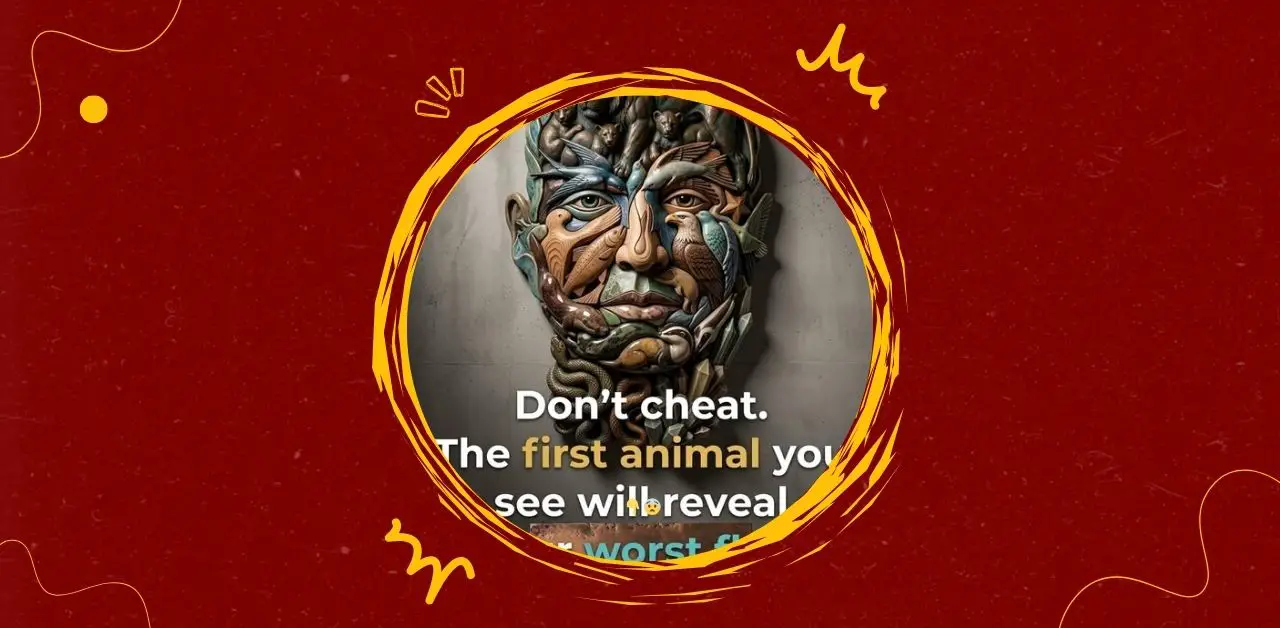
Art has long been used as a mirror to human psychology, reflecting our inner thoughts, emotions, and traits. One fascinating form of visual art is the illusion portrait, where multiple images are cleverly arranged to form a larger picture. In this case, animals are intricately combined to create the illusion of a human face. Such artworks invite viewers to interpret what they see first, often linking their perception to aspects of personality or hidden flaws. While not scientifically definitive, these interpretations spark curiosity and self-reflection, making the artwork both visually striking and psychologically engaging.
The Concept of First Impressions
When looking at an illusion, the first image we notice often reveals something about our subconscious. This is because our brains process familiar shapes and symbols more quickly, influenced by personal experiences, emotions, and even hidden fears. In animal-based illusions, the creature that stands out first may symbolize traits we identify with—or flaws we unconsciously recognize. For example, seeing a lion might suggest dominance or pride, while noticing a snake could hint at caution or mistrust.
Symbolism of Common Animals
- Lion: Often associated with strength, courage, and leadership. As a flaw, it may represent arrogance or stubbornness.
- Birds: Symbolize freedom and creativity. Their flaw could be restlessness or lack of focus.
- Snake: Represents transformation and wisdom, but also secrecy or manipulation when seen as a flaw.
- Fish: Linked to adaptability and intuition, yet may suggest passivity or avoidance.
- Other creatures: Each animal carries cultural and psychological meanings, shaped by myths, traditions, and personal associations.
Why We See Different Animals
The variation in what people notice first highlights the uniqueness of perception. Factors such as personality, mood, and even cultural background influence interpretation. Someone who values independence may notice birds, while a person focused on strength may see the lion. This diversity of perception makes illusion art a powerful tool for sparking conversation and introspection.
The Role of Flaws in Self-Reflection
Labeling the first animal seen as a “worst flaw” is not meant to be judgmental but rather reflective. Flaws are part of being human, and recognizing them can lead to growth. For instance, if pride is identified as a flaw, it may encourage humility. If restlessness is revealed, it may inspire mindfulness. The artwork becomes a playful yet meaningful way to explore self-awareness.
Artistic and Cultural Value
Beyond psychology, this type of artwork demonstrates incredible creativity. The blending of animals into a human face showcases the artist’s skill in composition and symbolism. It also connects to cultural traditions where animals have long been used to represent human traits, from ancient mythology to modern personality tests. The piece serves as both art and mirror, inviting viewers to engage with it on multiple levels.
Conclusion
Animal illusion art is more than a visual trick—it is a gateway to self-reflection. By noticing which animal stands out first, viewers are encouraged to consider their strengths and flaws, not as limitations but as opportunities for growth. The artwork reminds us that perception is deeply personal, shaped by who we are and how we see the world. In this way, it transforms a simple image into a profound exploration of identity.