
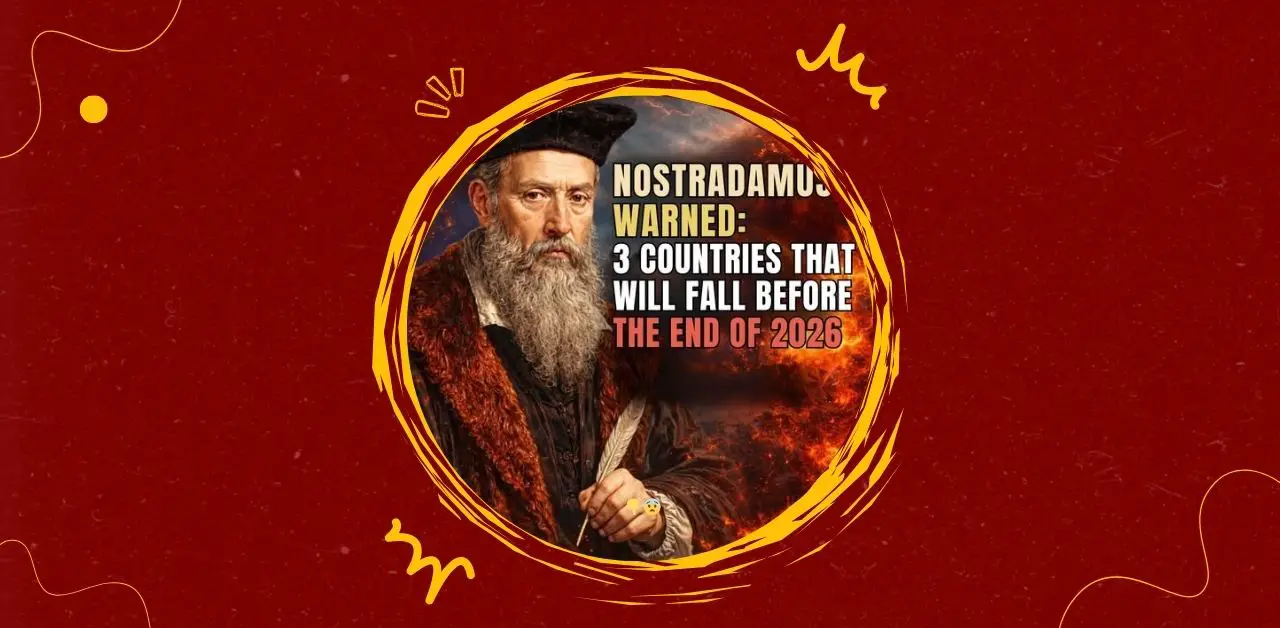
Michel de Nostredame, better known as Nostradamus, was a 16th‑century French astrologer and physician whose writings have fascinated readers for centuries. His book Les Prophéties contains hundreds of cryptic verses that many interpret as predictions of future events. Over time, his work has been linked to wars, revolutions, and global shifts. Recently, some interpretations have suggested that Nostradamus warned of the decline or “fall” of certain countries before the end of 2026.
Understanding Nostradamus’s Style
Nostradamus wrote in quatrains—four‑line verses filled with symbolism, allegory, and metaphor. He rarely named specific places directly, instead using coded language, ancient references, or astrological signs. This ambiguity allows for multiple interpretations, which is why his prophecies are often debated.
Modern Interpretations of the “Three Countries”
Some contemporary readers claim that Nostradamus hinted at instability in three nations before 2026. These interpretations are speculative and not universally accepted, but they often focus on:
- Economic Collapse
- Certain quatrains are read as warnings of financial turmoil.
- Analysts link these verses to countries facing debt crises or inflation.
- Political Upheaval
- Nostradamus’s references to “crowns overturned” or “leaders fleeing” are sometimes tied to governments under pressure.
- Modern interpreters suggest this could mean nations experiencing regime change or internal conflict.
- Environmental or Social Strain
- Verses describing floods, fires, or famine are connected to countries struggling with climate change or resource shortages.
Why Interpretations Differ
- Symbolic Language: Nostradamus used metaphors that can be applied to many situations.
- Historical Context: His writings reflected the turbulence of Renaissance Europe, making them adaptable to later events.
- Reader Bias: People often project current anxieties onto his verses, shaping them to fit modern headlines.
The Debate Around Nostradamus
Critics argue that Nostradamus’s work is too vague to be considered predictive. Supporters believe his writings hold timeless truths that reveal themselves during crises. The idea of “three countries falling” before 2026 is one such interpretation, but it remains speculative rather than factual.
Conclusion
Nostradamus continues to capture the imagination because his verses invite endless interpretation. While some claim he foresaw the decline of three nations before 2026, these readings are not definitive. What is clear is that his work reflects humanity’s enduring fascination with prophecy, uncertainty, and the search for meaning in turbulent times.