
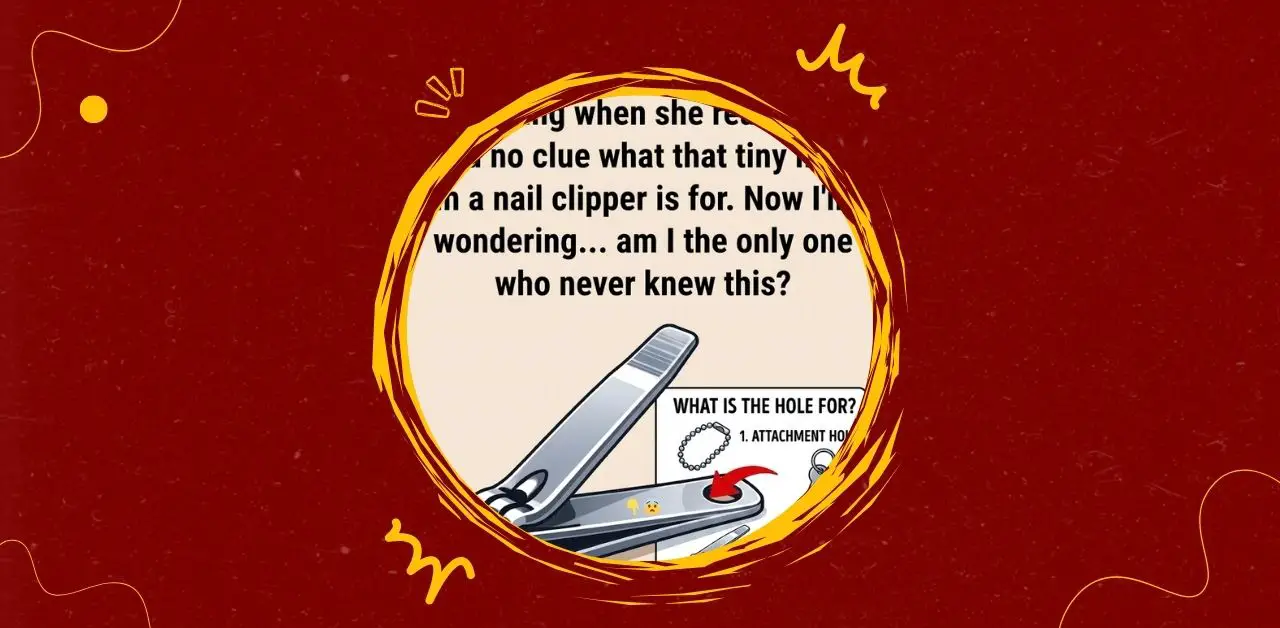
Nail clippers are among the most common grooming tools, found in nearly every household. Their design appears simple: two blades connected by a lever that trims nails with a quick press. Yet, many people notice a small hole in the lever and wonder about its purpose. Far from being decorative, this feature serves multiple practical functions that enhance the tool’s usability and convenience.
Attachment Function
The most obvious use of the hole is as an attachment point. Many nail clippers are sold with small chains, rings, or cords threaded through the hole, allowing them to be carried on a keychain or hung for storage. This prevents misplacement and ensures the clipper is always accessible. For individuals who travel frequently, attaching the clipper to a keyring or toiletry bag adds portability and convenience.
Stability and Grip
The hole also contributes to stability when using the clipper. By placing a fingertip into the hole or resting it against the lever, users gain additional grip and control. This reduces slippage, especially when trimming nails quickly or when hands are damp. The design reflects an ergonomic consideration, ensuring that the tool remains steady during use.
Mechanical Anchor
Beyond attachment and grip, the hole serves as a pivot and tension anchor within the clipper’s mechanism. The lever is connected to the blades through a pin that passes through the hole, creating the tension necessary for the blades to press together. Without this anchoring point, the clipper would not function properly. The hole is therefore integral to the mechanical design, ensuring durability and consistent performance.
Design Efficiency
The inclusion of the hole demonstrates how small design elements can serve multiple purposes. It combines practicality (attachment), ergonomics (grip), and mechanics (pivot anchor) in a single feature. This efficiency reflects the broader principle of multifunctional design, where everyday tools are engineered to maximize utility without unnecessary complexity.
Broader Perspective on Everyday Tools
The nail clipper hole is one example of how overlooked details in common objects often have important functions. Many household items incorporate subtle design features that enhance usability, safety, or convenience. Recognizing these details not only deepens appreciation for design but also encourages mindfulness in daily routines.
Conclusion
The tiny hole in a nail clipper is far from meaningless. It serves as an attachment point for portability, a grip aid for stability, and a mechanical anchor for the clipper’s function. This small feature highlights the ingenuity of everyday design, where simplicity meets practicality. By understanding such details, individuals gain a greater appreciation for the tools they use daily, reminding us that even the most ordinary objects often carry hidden layers of thought and purpose.