
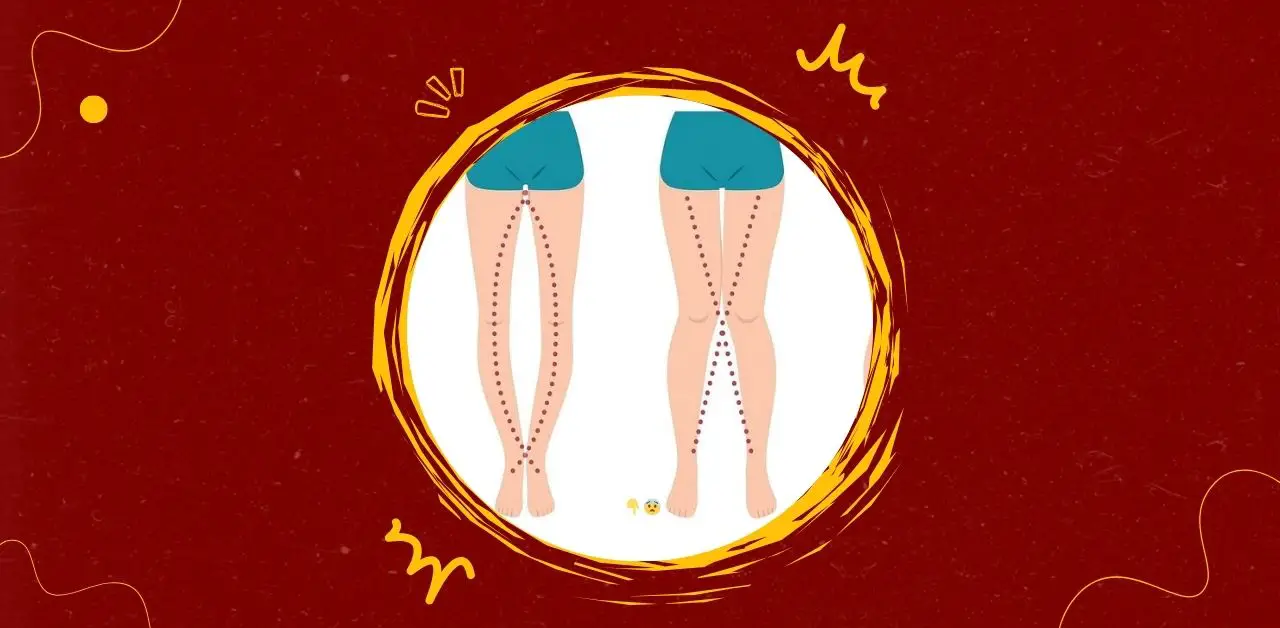
The way our legs align is more than just a matter of appearance—it can provide important insights into posture, bone development, and overall musculoskeletal health. Orthopedic specialists often evaluate leg shape to detect conditions that may affect mobility or long-term joint health.
🔹 Types of Leg Alignment
- Normal Alignment (Straight Legs)
- Knees, hips, and ankles align in a straight vertical line.
- Indicates balanced posture and healthy bone development.
- Bow Legs (Genu Varum)
- Legs curve outward, leaving a gap between the knees when feet are together.
- Common in toddlers but usually corrects naturally with growth.
- In adults, may be linked to arthritis or vitamin D deficiency.
- Knock Knees (Genu Valgum)
- Knees angle inward and touch while ankles remain apart.
- Normal in children up to age 7, but persistent cases may require medical evaluation.
- Can cause uneven stress on the knees and hips.
- Severe Knock Knees
- Excessive inward curvature where knees cross.
- May lead to gait problems, discomfort, and increased risk of joint strain.
⚕️ Health Implications
- Joint Stress: Misalignment increases wear on knees, hips, and ankles.
- Posture Problems: Can affect walking style and spinal alignment.
- Underlying Conditions: Rickets, arthritis, or genetic factors may contribute.
- Treatment Options: Physical therapy, corrective exercises, braces, or surgery in severe cases.
🌟 Conclusion
Leg alignment is not about appearance—it’s a window into bone health, posture, and mobility. Understanding these variations helps identify when medical advice may be needed and encourages better care for joint health.
✅ Key Takeaway: Straight legs generally indicate balanced posture, while bow legs or knock knees may signal developmental or orthopedic concerns. Evaluating leg alignment provides valuable insights into overall well-being.