
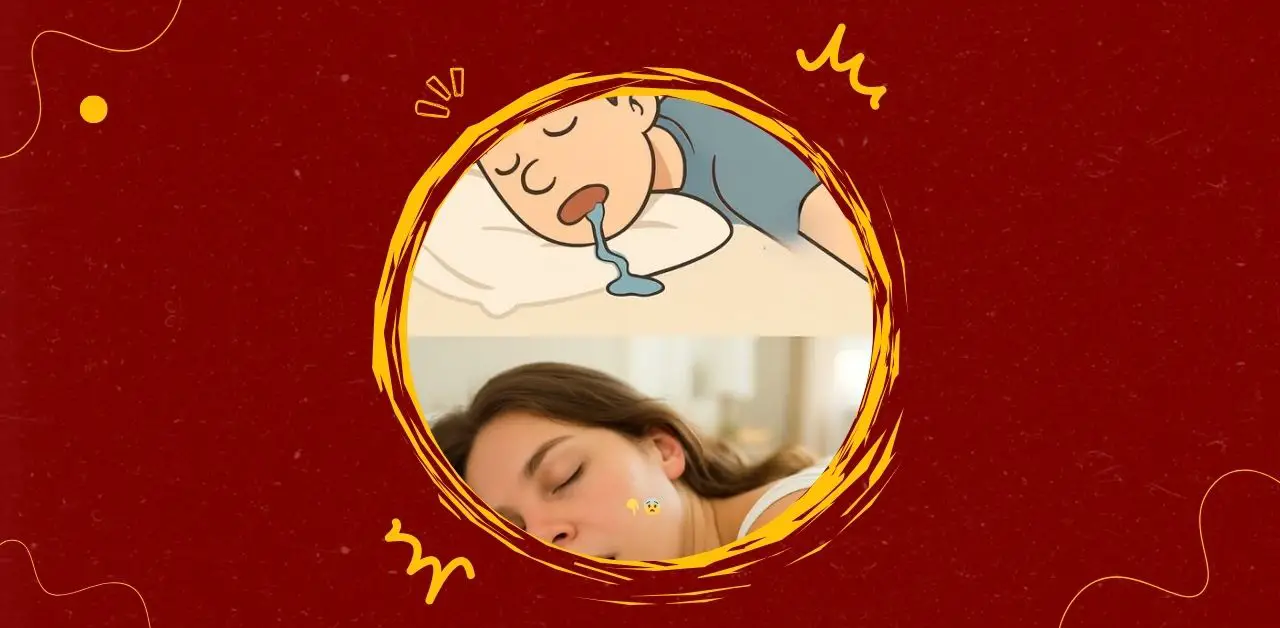
Drooling while asleep is a common occurrence that many people notice when they wake up with a damp pillow. Though often dismissed as a minor embarrassment, this simple act can actually provide insight into how the brain and body are functioning during rest. Sleep is a complex process involving cycles, muscle relaxation, and neurological regulation. When drooling happens, it is not necessarily a negative sign—it can reflect certain aspects of brain activity, relaxation, and even health.
THE SCIENCE BEHIND DROOLING:
During sleep, the body enters phases where muscles relax deeply. The brain reduces conscious control over swallowing and saliva management. If the mouth is open, saliva naturally escapes. This is especially common in deep sleep stages, when the body is most relaxed and the brain is focused on repair and restoration rather than maintaining small reflexes.
Drooling can also be linked to the position of the body. Sleeping on the side or stomach allows gravity to pull saliva forward, while sleeping on the back usually keeps it contained. The brain’s role here is indirect: it prioritizes deeper restorative processes over minor reflexes, which is why drooling is more likely when sleep is truly restful.
WHAT DROOLING MAY INDICATE ABOUT THE BRAIN:
- Deep Relaxation: Drooling often suggests that the brain has entered a deep sleep phase. This is when memory consolidation, tissue repair, and hormone regulation occur. In other words, drooling can be a sign that the brain is successfully guiding the body into restorative rest.
- Healthy Sleep Cycles: If drooling happens regularly, it may indicate that the brain is allowing uninterrupted transitions between sleep stages. This continuity is essential for feeling refreshed upon waking.
- Reduced Stress: People under high stress often experience fragmented sleep. Drooling can be a subtle sign that the brain is calm enough to let the body fully relax, reducing tension in facial and throat muscles.
- Efficient Nervous System Function: The autonomic nervous system, controlled by the brain, manages saliva production. Drooling shows that this system is active and responsive, even during unconscious states.
WHEN DROOLING MAY SIGNAL SOMETHING ELSE:
While drooling is usually harmless, excessive or sudden changes can sometimes point to underlying issues. For example, nasal congestion, allergies, or sleep apnea can increase mouth breathing and drooling. Neurological conditions may also affect muscle control, though this is less common. In most cases, drooling is simply a reflection of sleep posture and relaxation, not a cause for concern.
PRACTICAL TIPS TO MANAGE DROOLING:
- Adjust sleeping position: Sleeping on the back reduces drooling.
- Stay hydrated: Balanced hydration helps regulate saliva consistency.
- Address nasal congestion: Clear airways reduce mouth breathing.
- Practice good sleep hygiene: A calm environment supports deeper, healthier sleep cycles.
CONCLUSION:
Drooling during sleep is not a flaw but a natural outcome of the brain’s focus on deeper priorities. It often signals that the body is resting well, the brain is engaged in repair, and the nervous system is functioning smoothly. Instead of viewing it as an inconvenience, drooling can be seen as a quiet indicator of healthy, restorative sleep.