
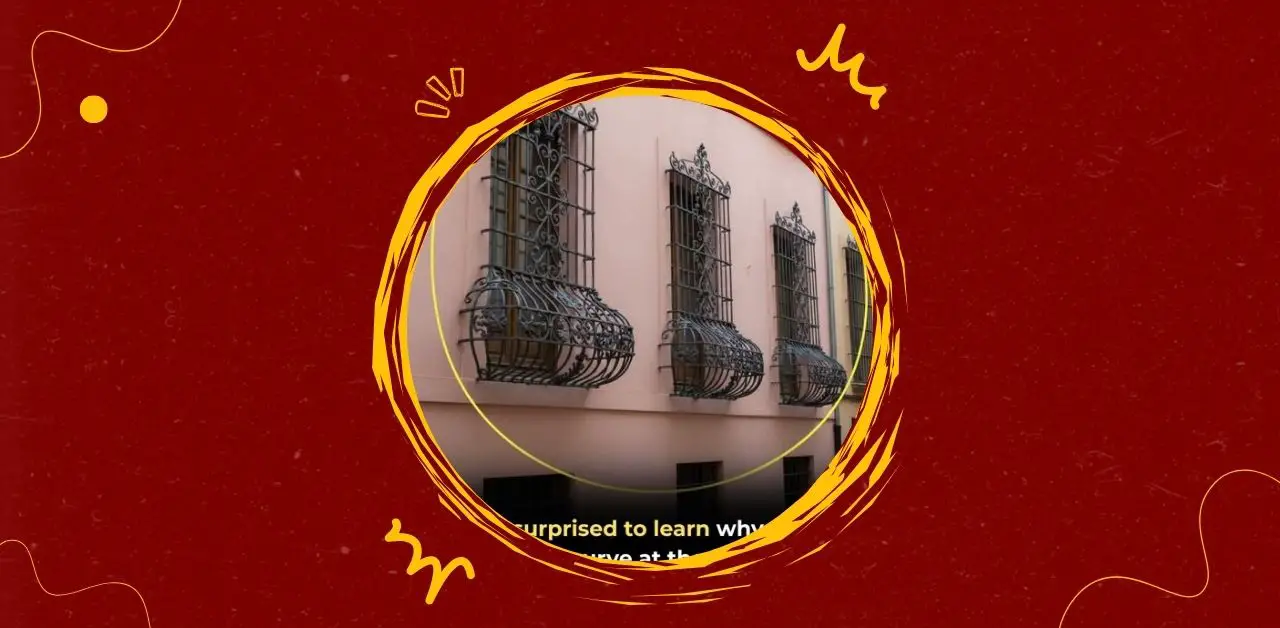
Curved window bars—often called “belly bars”—are not just decorative. They serve practical purposes: providing extra space for flower pots or storage, improving airflow and light, enhancing safety by preventing falls, and historically symbolizing cultural aesthetics.
🔍 Functional Benefits
- Space for Plants & Storage: The outward curve creates a small shelf-like area where residents can place flower pots, herbs, or even small household items. This is especially common in European and Latin American cities.
- Improved Ventilation & Light: The design allows windows to open wider without obstruction, letting in more air and sunlight.
- Safety Feature: In multi-story buildings, the curve helps prevent accidental falls by creating a barrier that extends outward.
🌍 Historical & Cultural Roots
- Architectural Tradition: In historic towns, curved bars were part of wrought iron craftsmanship, blending utility with artistry.
- Symbolism: In some cultures, the “belly” shape was seen as a sign of prosperity or protection.
- Urban Adaptation: Narrow streets and small balconies made curved bars a practical way to expand usable space without altering building structures.
🛡️ Security Considerations
- Protection Against Intruders: Like straight bars, curved grills reinforce windows against break-ins.
- Added Strength: The outward bulge makes it harder for intruders to tamper with or cut through the bars.
✅ Final Thoughts
Curved window bars are a clever blend of functionality, safety, and tradition. They provide extra living space, improve ventilation, and add cultural charm while still serving their primary role as security features. What many see as a decorative flourish is actually a centuries-old design solution that continues to be practical today.