
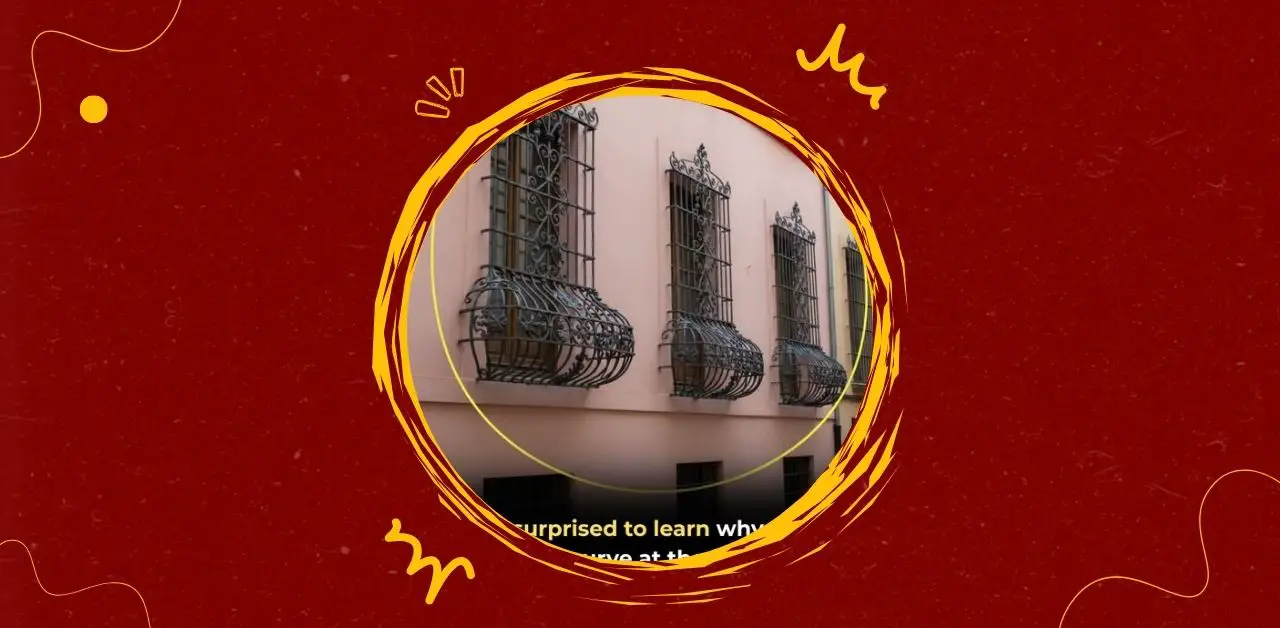
At first glance, curved window bars may look like a decorative flourish. Their elegant outward bend often gives buildings a distinctive character, leading many people to assume they are purely ornamental. However, the design actually serves practical purposes that combine safety, function, and comfort.
Functional Reasons Behind the Curve
- Ventilation and Space
- The outward curve creates extra room between the window and the bars.
- This allows windows to open fully, improving airflow and natural ventilation without compromising security.
- Safety and Security
- Curved bars make it harder for intruders to tamper with the window.
- The outward bend adds strength and prevents easy access compared to flat bars.
- Practical Use
- The extra space can be used for small items like flower pots or plants, turning the bars into mini balconies.
- This adds functionality without requiring additional structures.
- Comfort and Light
- By curving outward, the bars reduce the feeling of confinement.
- They allow more light to enter the room, making interiors brighter and more welcoming.
Cultural and Architectural Influence
In many regions, curved window bars are part of traditional architecture. They reflect a blend of practicality and artistry—protecting homes while adding charm. Over time, the design became associated with both safety and beauty, which is why people often mistake them for decoration alone.
Conclusion
Curved window bars are more than ornamental details. They are a clever architectural solution that balances security, ventilation, and aesthetics. While many assume the design is decorative, the real reason lies in its ability to make homes safer, brighter, and more comfortable.