
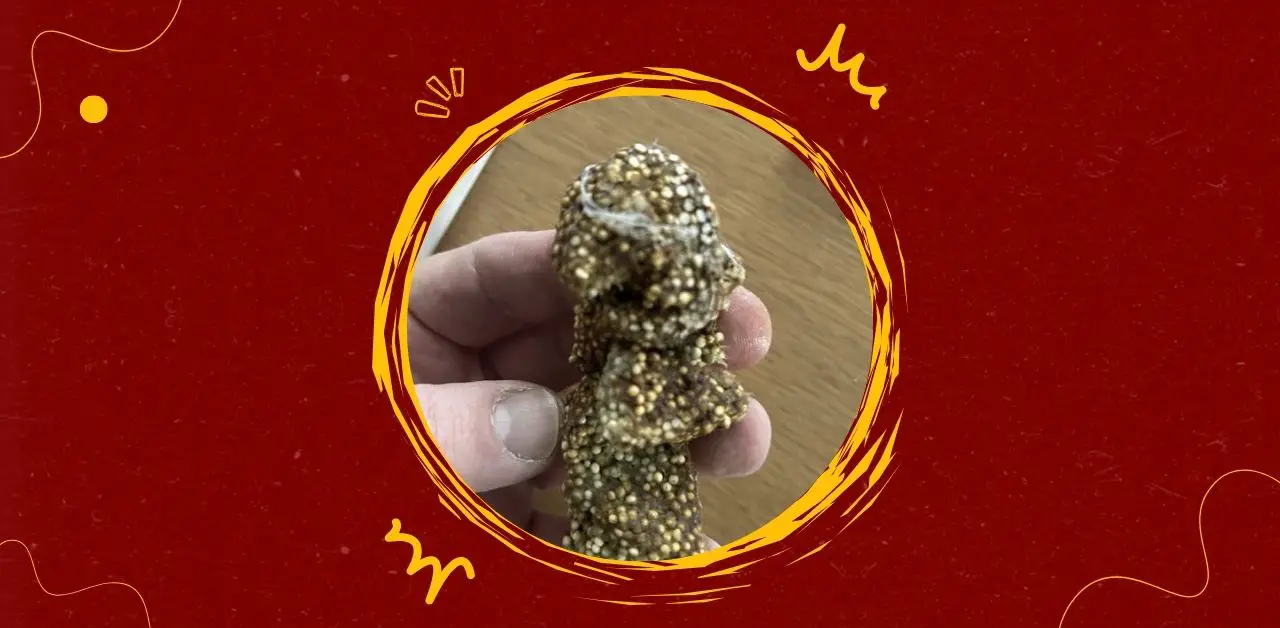
Discovering unusual objects inside the home often raises concern, especially when they appear sticky, irregular, and covered in seeds. The item you found under a shelf—a clump of gunk holding tiny round seeds together—may look strange and even unsettling. While it might not immediately show signs of animal activity, the presence of a small hole nearby and brick powder suggests something has been moving or nesting in the area. Understanding what this object could be helps you decide whether it is harmless, a sign of pests, or simply residue from past activity.
Possible Explanations
1. Rodent or Small Animal Nesting Material
- Rodents such as mice sometimes collect food items like seeds and bind them together with saliva or other sticky substances.
- The cluster may represent stored food rather than a nest, placed in a hidden corner for later consumption.
- The small hole and brick powder nearby could indicate an entry point where rodents have been burrowing or squeezing through.
2. Insect Activity
- Certain insects, such as beetles or wasps, occasionally use seeds or organic material to build protective casings.
- While less common indoors, it is possible that the sticky clump is related to insect nesting or food storage.
3. Homemade or Dropped Bird Treat
- The object resembles seed balls often made for birds, where seeds are bound together with honey, peanut butter, or fat.
- If someone in the household previously made or stored bird feed, a piece may have fallen and hardened under the shelf.
4. Decay or Residue from Stored Food
- If seeds were spilled and mixed with moisture, oils, or sticky residue, they could clump together naturally.
- Over time, dust and humidity may have hardened the mass, making it look like a strange gunk.
Why It Appears Sticky and Strange
- Organic Binding: Saliva, oils, or sugary substances can act as natural glue.
- Moisture: Humidity indoors can cause seeds to stick together.
- Age: Long storage under a shelf allows dust and dirt to accumulate, giving it a hardened, unusual texture.
Safety Considerations
- Do Not Touch Bare-Handed: The sticky residue may harbor bacteria or mold.
- Wear Gloves: If you plan to remove it, use protective gloves.
- Check for Entry Points: The hole and brick powder suggest possible pest access. Seal gaps to prevent further activity.
- Monitor for Signs: Look for droppings, gnaw marks, or noises that may confirm rodent presence.
What To Do Next
- Inspect the Area: Check corners, shelves, and behind furniture for similar seed clusters.
- Seal the Hole: Use caulk or filler to block the small hole where brick powder was found.
- Clean Thoroughly: Dispose of the seed clump in a sealed bag and disinfect the area.
- Observe: If more appear, consider contacting pest control to rule out rodents or insects.
Conclusion
The sticky seed cluster you found is most likely either rodent food storage, insect-related residue, or a dropped birdseed treat. While it looks unusual, it is not inherently dangerous if handled properly. The nearby hole and brick powder suggest possible pest activity, so sealing entry points and monitoring the area is wise. Treat the discovery as a reminder to inspect hidden corners, maintain cleanliness, and ensure your home remains free of unwanted visitors.