
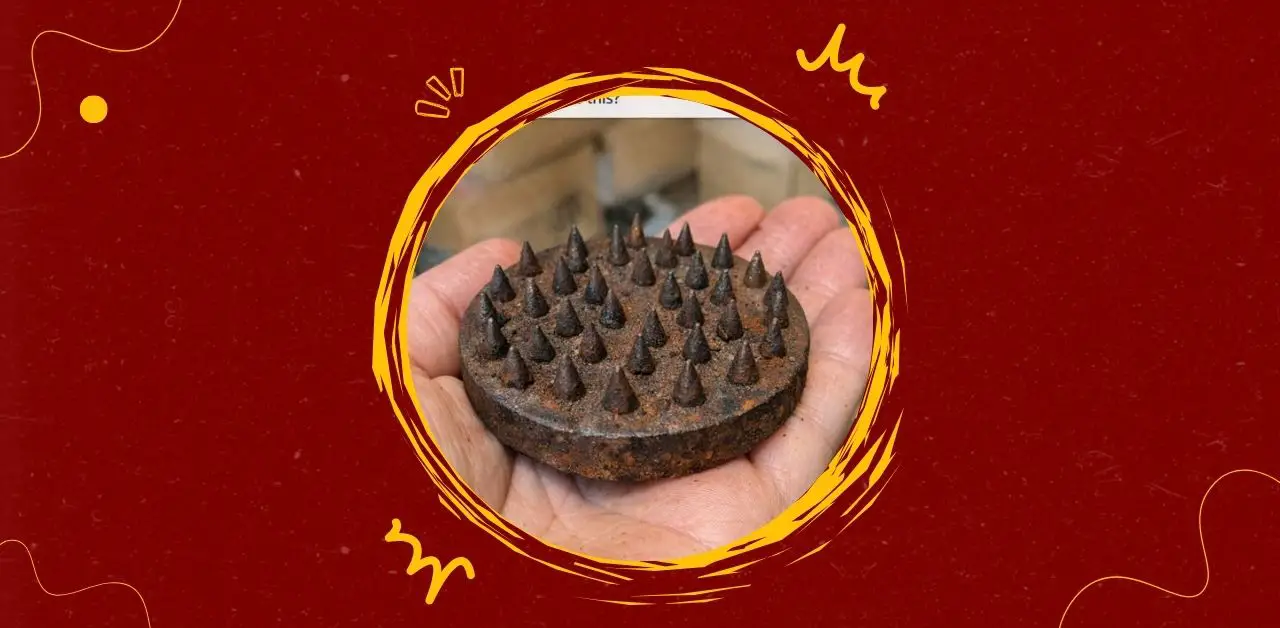
Finding unusual objects while clearing out old storage spaces often sparks curiosity. The rusted, spiked metal base you discovered is one such item—heavy, covered in sharp conical spikes, and seemingly dangerous at first glance. While its appearance may suggest something sinister, these types of objects were typically utilitarian tools or components used in industrial, agricultural, or workshop settings. Understanding its possible origins and functions helps place it within a historical context and reveals its practical purpose.
Possible Origins and Uses
- Textile and Leatherworking
- Spiked bases were commonly used in workshops to hold hides, fabrics, or ropes in place while they were cut, stretched, or processed.
- The spikes prevented slipping, acting like a primitive clamp or stabilizer.
- Agricultural Processing
- In farming, spiked wheels or plates were used in threshing or grinding machinery.
- The spikes helped tear apart husks, fibers, or plant material, making it easier to separate usable parts from waste.
- Industrial Machinery Component
- Heavy spiked bases were sometimes mounted under equipment to stabilize machines on dirt or wooden floors.
- The spikes dug into the ground or wood, preventing movement during operation.
- Protective or Deterrent Hardware
- In rare cases, spiked bases were used as deterrents against animals or pests, placed around property or equipment to discourage tampering.
Why It Looks Dangerous
- Sharp Spikes: Designed for grip and stability, not harm, but they can cause injury if handled carelessly.
- Rust: Years of storage have corroded the metal, giving it a more menacing appearance.
- Weight: Its heaviness reflects durability, built to withstand industrial use rather than portability.
Historical Context
Objects like this are often found in attics, barns, or workshops because they were once common but became obsolete with modern machinery. Families stored them away rather than discarding them, leading to discoveries decades later.
- Era: Likely from the late 19th to mid-20th century.
- Material: Cast iron or steel, chosen for strength and longevity.
- Function: Entirely practical—built to last through heavy-duty work.
Safety Considerations
- Wear Gloves: Rusted spikes can cause cuts and infections.
- Handle Carefully: Avoid stepping near or lifting without protection.
- Dispose or Preserve: Depending on interest, it can be discarded as scrap metal or preserved as a historical artifact.
Preservation Tips
If you choose to keep it:
- Clean Rust: Use a wire brush to remove loose rust.
- Apply Oil: A light coat of mineral oil can slow further corrosion.
- Display Safely: Place it where it cannot cause injury, perhaps as a conversation piece.
Conclusion
The rusted spiked base you found is most likely a tool or machinery component from older industrial or agricultural practices, designed to grip, shred, or stabilize materials. While it looks dangerous today, its original purpose was practical, not harmful. Treat it with caution due to rust and sharpness, but recognize it as a piece of history that reflects how past generations worked with heavy-duty equipment.
Would you like me to create a step-by-step restoration guide so you can safely clean and preserve this item as an antique display piece rather than discarding it?