
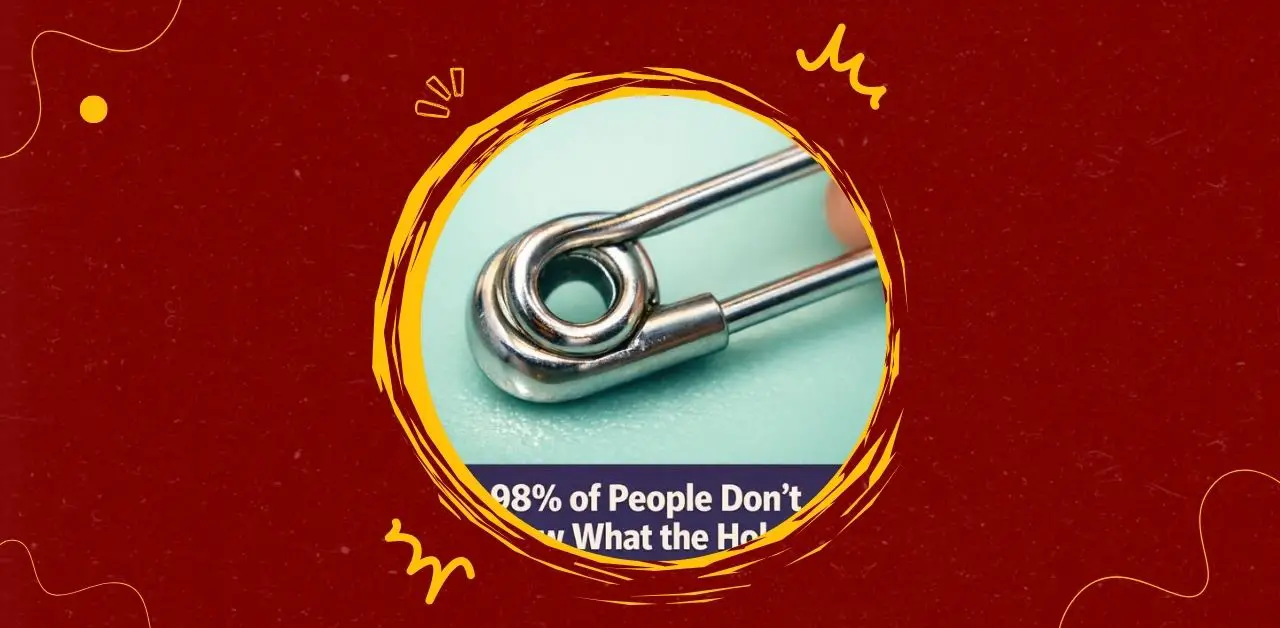
Safety pins are everyday objects we often take for granted. They’re used to fasten clothing, secure fabric, or serve as quick fixes in countless situations. Yet, despite their simple design, many people don’t realize that every part of a safety pin has a purpose—including the small hole at the coiled end. Firefighters, engineers, and designers alike often emphasize how even the tiniest details in tools and household items are intentional. The hole in a safety pin is one such feature, designed with practicality and safety in mind.
Why the Hole Exists
The hole at the coiled end of a safety pin is not decorative—it plays a functional role in the pin’s design. It helps anchor the wire during manufacturing, ensuring the pin is coiled tightly and securely. This coil provides the tension that allows the pin to open and close smoothly while maintaining enough pressure to stay locked when fastened. Without the hole, the wire could slip or loosen, making the pin less reliable.
How It Improves Safety
The hole contributes to the overall safety of the pin in several ways:
- Secure tension: By anchoring the wire, the hole ensures the pin maintains its spring-like pressure, preventing accidental openings.
- Durability: It strengthens the coil, making the pin last longer and resist bending.
- Ease of use: The tension created by the coil allows the pin to open easily when pressed yet stay firmly closed when fastened.
Everyday Importance
Think about how often safety pins are used: fastening a torn shirt, securing a scarf, or even serving as a temporary fix for broken zippers. In all these cases, the reliability of the pin matters. The hole in the coil is a small but crucial detail that ensures the pin works consistently, keeping fabrics secure without slipping apart.
Design Genius in Simplicity
The safety pin was invented in the 19th century, and its design has remained largely unchanged because it works so well. The inclusion of the hole demonstrates how thoughtful engineering can make everyday objects safer and more effective. It’s a reminder that even the smallest details in design can have a big impact on functionality.
Conclusion
The hole in a safety pin may seem insignificant, but it is a vital part of the design. It anchors the wire, maintains tension, and ensures the pin functions safely and reliably. Next time you use a safety pin, you’ll know that this tiny feature is what makes it dependable.
Simple objects often hide clever engineering, and the safety pin is a perfect example of how small details can make a big difference in everyday life.