
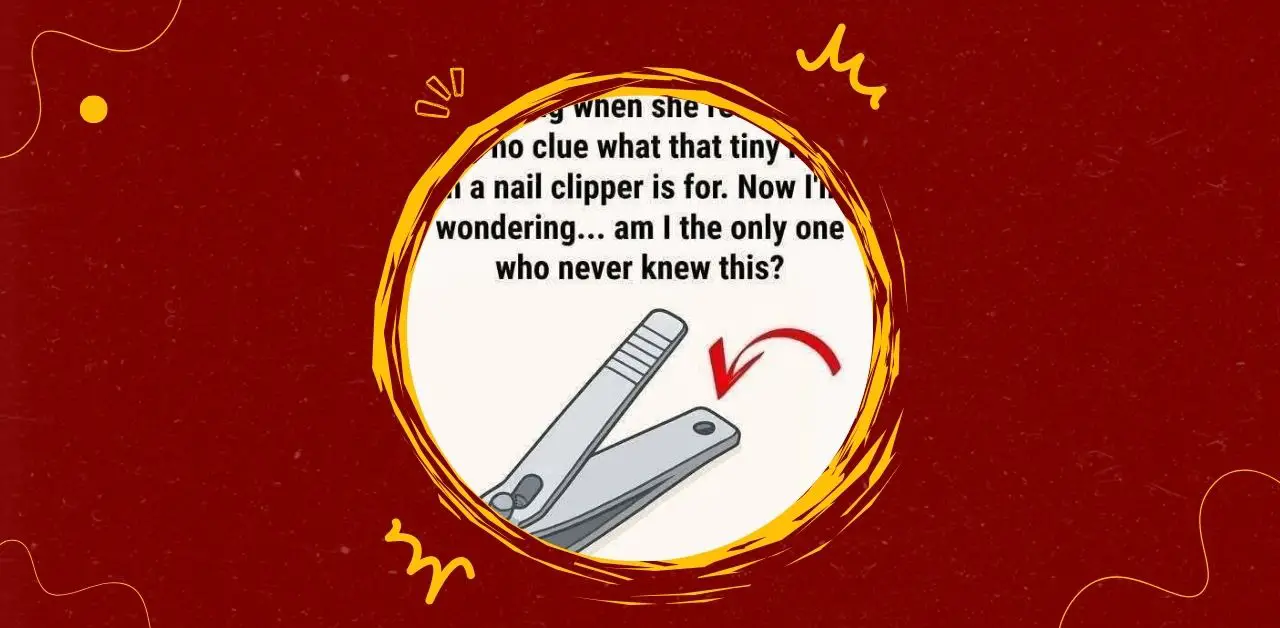
Nail clippers are one of those everyday tools we all use without giving much thought to their design. They’re simple, practical, and reliable. Yet, tucked into their structure is a small feature that often goes unnoticed—a tiny hole near the lever. Many people have wondered about its purpose, and some even laugh when they realize they’ve used clippers for years without knowing why that hole exists. Let’s explore the design, function, and hidden utility of this overlooked detail.
The Design of Nail Clippers
A standard nail clipper consists of three main parts:
- The base: two curved blades that cut the nail when pressed together.
- The lever: a metal arm that provides the force needed to press the blades.
- The pin and hole mechanism: a small rod or pin that connects the lever to the base, often passing through the tiny hole.
This design is simple yet ingenious, allowing the clipper to deliver strong pressure with minimal effort.
The Purpose of the Tiny Hole
The hole in the lever serves multiple functions:
- Assembly and Stability The hole is part of the mechanism that holds the lever in place. When the pin is inserted through the hole, it secures the lever to the clipper body, ensuring smooth operation. Without it, the lever would detach easily, making the clipper unusable.
- Rotation of the Lever The hole allows the lever to rotate around the pin. This rotation is what enables you to flip the lever up and down, creating the pressure needed to cut nails.
- Attachment Point Many people use nail clippers as portable tools, carrying them on keychains or travel kits. The hole doubles as an attachment point, so you can thread a small chain or ring through it. This makes the clipper easy to carry and less likely to get lost.
Why People Overlook It
Because the hole is small and doesn’t directly interact with the cutting process, most users simply ignore it. The focus is always on the blades and the lever’s pressing action. It’s only when someone points it out—or when you try to attach the clipper to a keychain—that the hole’s purpose becomes clear.
Everyday Utility
Understanding this design detail can make nail clippers more versatile:
- Travel convenience: Attach them to a keychain or toiletry bag.
- Maintenance: If the lever ever detaches, knowing how the hole and pin work helps you reassemble it.
- Durability: The hole ensures the lever stays aligned, preventing uneven pressure that could damage the blades.
Conclusion
The tiny hole in a nail clipper is more than just a random design quirk—it’s a functional feature that ensures stability, allows rotation, and provides portability. It’s a reminder that even the simplest tools are carefully engineered with multiple purposes in mind. Next time you pick up a nail clipper, take a moment to appreciate the thought that went into its design.