
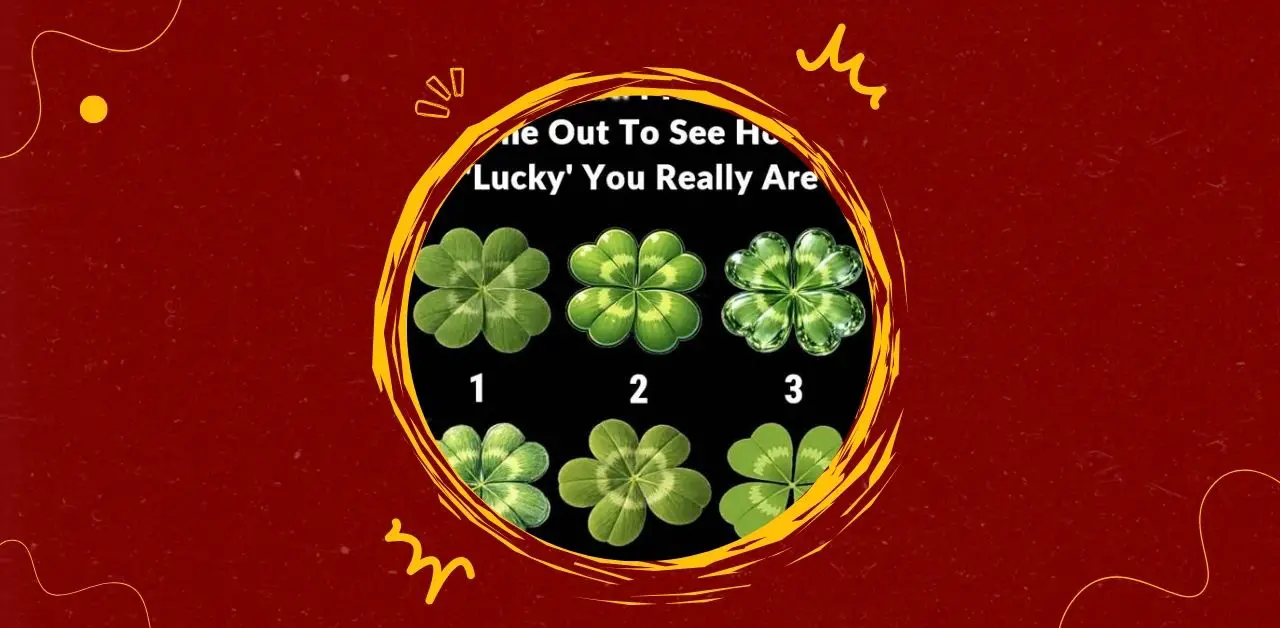
Visual puzzles have long fascinated people because they test not just eyesight but also perception, intuition, and decision-making. The clover puzzle—asking viewers to pick the odd one out—adds a playful twist by linking the choice to “luck.” While at first glance it seems like a simple game, it actually touches on psychology, symbolism, and cultural ideas about fortune.
👀 Why Odd-One-Out Puzzles Work
- Pattern recognition: Humans are wired to spot differences in shapes, colors, and symmetry.
- Cognitive bias: People often see what they expect rather than what’s truly there.
- Decision-making under pressure: Choosing quickly can reveal instinctive preferences.
These puzzles are engaging because they combine logic with intuition, making them feel like a test of both skill and personality.
🍀 Clover Symbolism
Clovers, especially the four-leaf variety, are universally associated with luck. Each leaf is said to represent:
- Faith
- Hope
- Love
- Luck
By presenting multiple clovers with subtle differences, the puzzle challenges viewers to connect their choice with deeper symbolic meaning.
🎲 What Your Choice Might Suggest
While not scientific, many puzzle creators attach playful interpretations to each option. For example:
- Choosing a clover with fewer leaves: Suggests practicality and realism—you don’t chase luck, you make it.
- Choosing one with extra leaves or unusual symmetry: Indicates creativity and openness to unexpected opportunities.
- Choosing the most “perfect” clover: Reflects a desire for harmony, balance, and traditional good fortune.
The fun lies in comparing your choice with friends and seeing how interpretations differ.
🧠 The Psychology of Luck
Interestingly, psychologists note that people who believe they are lucky often behave in ways that increase their chances of success:
- They stay open to new experiences.
- They notice opportunities others overlook.
- They maintain optimism, which influences outcomes.
So, whether or not a clover puzzle can truly measure luck, the act of engaging with it can reinforce positive thinking.
🌟 Conclusion
The clover odd-one-out puzzle is more than a casual game—it’s a reminder of how symbols, perception, and belief in luck shape our daily lives. Whether you picked the “right” clover or not, the real takeaway is that luck often comes from mindset, not chance.