
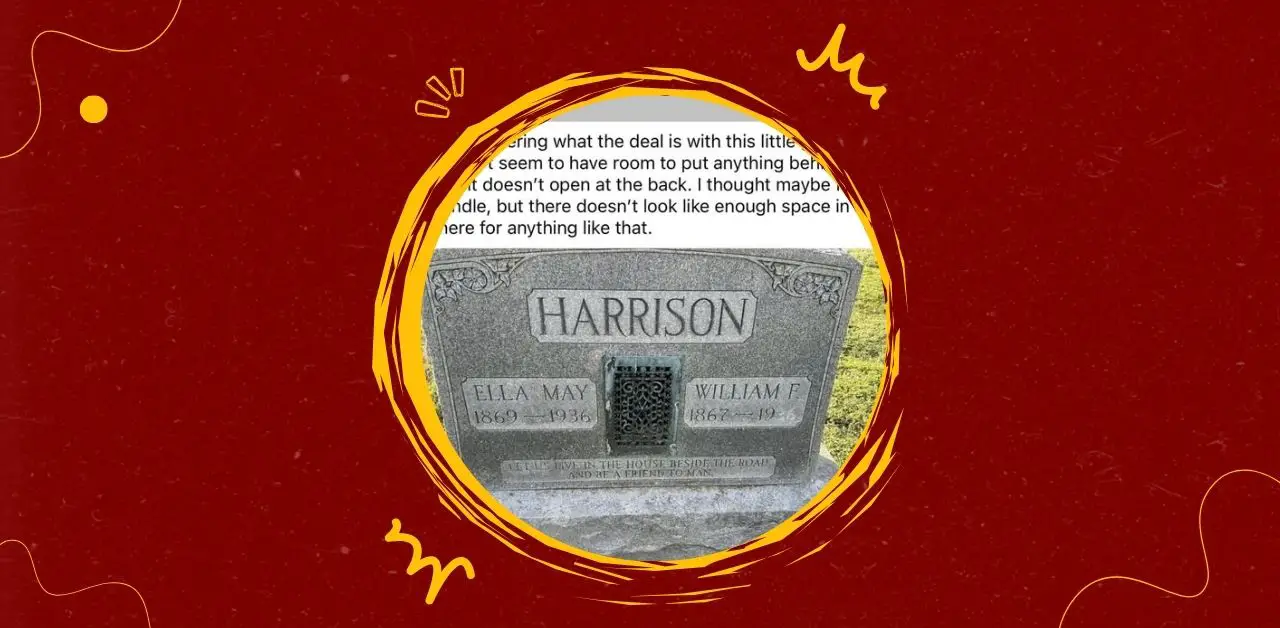
Cemeteries often hold fascinating details that spark curiosity. Among the more unusual features are gravestones with small metal insets or grates. At first glance, these additions may seem puzzling—too small for candles, not designed to open, and sometimes purely decorative. Yet they carry historical, cultural, and symbolic significance that connects us to past traditions in memorial design.
What the Grate Represents
The small metal grate embedded in a gravestone is most often a vent-like decorative insert or a symbolic feature rather than a functional element. These grates were sometimes used in the early 20th century as ornamental touches, meant to break up the solid stone surface and add visual interest. In some cases, they were designed to resemble windows or doors, symbolizing passage into another realm or the idea of the grave as a “house of rest.”
Historical Context
- Symbolism of openings: In memorial art, openings or grates can represent the soul’s journey, a window to eternity, or a connection between the living and the dead.
- Design trends: During the late 19th and early 20th centuries, gravestones often incorporated metalwork to reflect craftsmanship and permanence.
- Practical use: Though rare, some grates were intended to hold small offerings, flowers, or even incense. However, most were purely decorative.
Why It Looks Unusual
Modern gravestones tend to be simpler, focusing on inscriptions and polished stone. Older memorials, however, often included intricate details like carved motifs, embedded tiles, or metal inserts. To contemporary eyes, these features can seem odd or mysterious, especially when their original purpose has faded from common knowledge.
Cultural and Symbolic Meanings
- House imagery: The inscription “Let us live in the house beside the road and be a friend to man” reinforces the idea of the grave as a symbolic home. The grate may serve as a “window” into that home.
- Connection to faith: In some traditions, grates or openings symbolize divine light or the soul’s passage.
- Craftsmanship: The inclusion of metalwork highlights the care and artistry invested in memorials of the time.
Safety and Preservation
If you encounter such a feature on a gravestone:
- Do not tamper: The grate is part of the memorial’s design and should be preserved.
- Respect heritage: These details are valuable for understanding cultural history.
- Document carefully: Photographing and recording unusual features helps preserve knowledge for future generations.
Conclusion
The small metal grate on a gravestone is not a hidden compartment or functional vent—it is a decorative and symbolic element rooted in historical memorial design. It reflects themes of passage, remembrance, and the artistry of earlier eras. While its purpose may seem mysterious today, it serves as a reminder of how people once expressed love, faith, and respect for the departed through intricate details.