
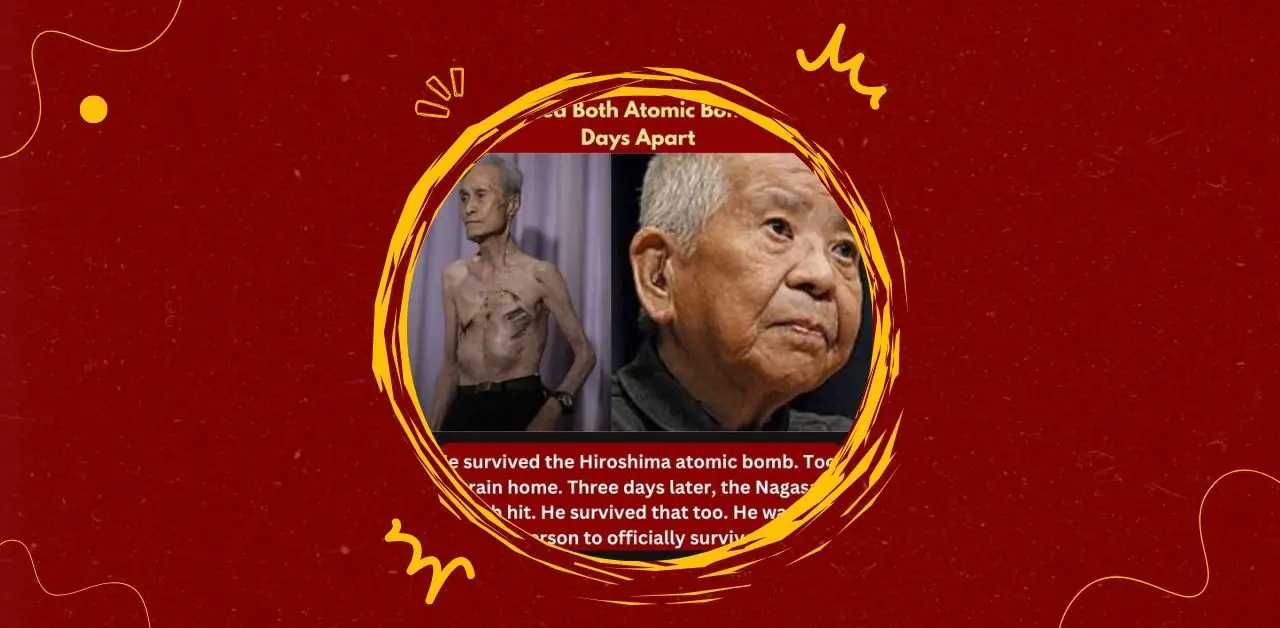
Tsutomu Yamaguchi was a Japanese marine engineer who uniquely survived both the Hiroshima and Nagasaki atomic bombings in August 1945, becoming the only person officially recognized by the Japanese government as a “nijyuu hibakusha” (twice-bombed survivor). His extraordinary story reflects both personal resilience and the broader tragedy of nuclear warfare.
Early Life and Career
- Born: March 16, 1916, in Nagasaki, Japan.
- Occupation: Marine engineer for Mitsubishi Heavy Industries.
- By 1945, Yamaguchi was 29 years old and working on a three-month assignment in Hiroshima, designing oil tankers for Mitsubishi.
Hiroshima Bombing (August 6, 1945)
- On the morning of August 6, 1945, Yamaguchi was preparing to leave Hiroshima after completing his work.
- At 8:15 AM, the U.S. dropped the atomic bomb “Little Boy.”
- Yamaguchi was less than two miles from ground zero. He suffered severe burns to his face and arms, temporary blindness, and ruptured eardrums.
- Despite his injuries, he managed to survive and spent the night in a bomb shelter.
Return to Nagasaki
- The next day, Yamaguchi boarded a train back to his hometown, Nagasaki, where his wife and child lived.
- He arrived on August 7, 1945, still bandaged and weak, but determined to warn his colleagues and family about the devastation he had witnessed.
- On August 9, 1945, while reporting to work at Mitsubishi, the second bomb “Fat Man” was dropped on Nagasaki.
- Yamaguchi was again within two miles of the blast. The explosion destroyed his workplace, but he survived with relatively minor injuries compared to Hiroshima.
Aftermath and Recognition
- Yamaguchi’s wife and child also survived the Nagasaki bombing, though their home was destroyed.
- He continued working for Mitsubishi after the war and later became a teacher and advocate for nuclear disarmament.
- In 2009, the Japanese government officially recognized him as the only person to have survived both atomic bombings.
- Death: January 4, 2010, at age 93, from stomach cancer.
Legacy
- Yamaguchi’s survival is often seen as symbolic of human resilience amid unimaginable destruction.
- He became a public speaker, sharing his experiences to promote peace and warn against nuclear weapons.
- His testimony highlighted the suffering of hibakusha (atomic bomb survivors), many of whom faced lifelong health issues and social stigma.
- He was featured in documentaries and books, including John Hersey’s Hiroshima and later works on nuclear history.
Significance
- Historical Rarity: While over 160 people are believed to have experienced both bombings, Yamaguchi is the only one officially recognized.
- Moral Voice: His story became a powerful reminder of the human cost of nuclear war.
- Cultural Impact: He symbolized both tragedy and hope, embodying Japan’s post-war pacifist stance.
In sum, Tsutomu Yamaguchi’s life is not just a tale of survival but a profound testimony against nuclear warfare. His dual survival made him a living witness to the catastrophic consequences of atomic weapons, and his advocacy ensured that his experiences contributed to global conversations on peace and disarmament.