
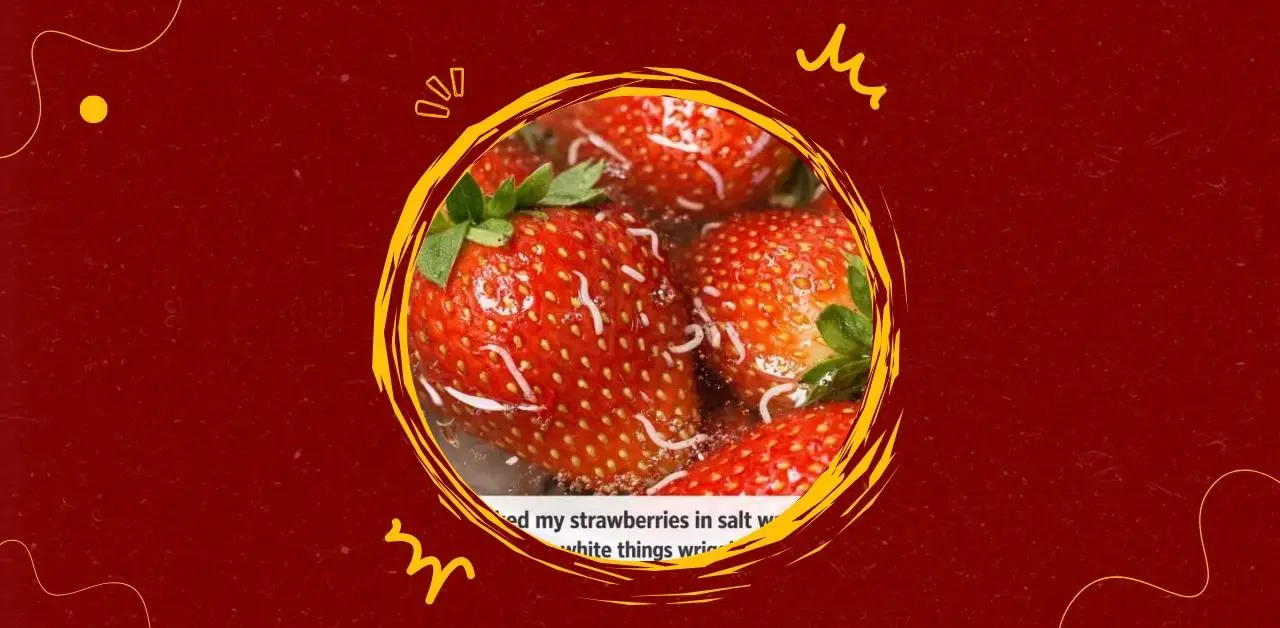
Strawberries are one of the most beloved fruits worldwide, cherished for their sweetness, vibrant color, and versatility in desserts, drinks, and snacks. Yet, a surprising and unsettling discovery often circulates online: when strawberries are soaked in salt water, tiny white worm-like organisms sometimes emerge. This revelation sparks curiosity, concern, and even hesitation among consumers. Understanding why this happens, what these organisms are, and whether strawberries remain safe to eat is essential for anyone who enjoys this fruit.
Why Worms Appear in Strawberries
The small white creatures that sometimes wriggle out of strawberries after a salt water soak are typically larvae of harmless insects, most commonly fruit flies. These insects lay eggs inside the fruit, and the larvae develop within the flesh. Because strawberries are soft and porous, they provide an ideal environment for these tiny organisms. The salt water soak acts as a mild irritant, drawing the larvae out of the fruit’s surface and making them visible to the naked eye.
It is important to note that this phenomenon is not unique to strawberries. Many fruits and vegetables, especially those grown close to the ground, can harbor small insects or larvae. The difference is that strawberries, with their delicate structure and tiny crevices, make these organisms more noticeable when exposed to salt water.
Food Safety Considerations
The presence of larvae in strawberries may seem alarming, but it does not automatically mean the fruit is unsafe to eat. In fact, consuming small amounts of such organisms is not considered harmful in most cases. Food safety authorities generally classify them as natural contaminants, and strict regulations already exist to limit their presence in commercially sold produce.
That said, proper washing and preparation are essential. Rinsing strawberries thoroughly under running water helps remove dirt, pesticides, and any visible pests. Soaking them briefly in salt water or vinegar water can further reduce the likelihood of consuming hidden larvae. While the idea may be unpleasant, the actual health risk is minimal compared to the benefits of eating fresh fruit.
The Role of Farming Practices
The occurrence of larvae in strawberries is influenced by farming methods. Strawberries grown with fewer pesticides or in organic systems may have a slightly higher chance of harboring insects, simply because fewer chemicals are used to deter them. However, many consumers prefer organic produce precisely because it avoids heavy chemical use. This trade-off highlights the balance between natural farming practices and consumer expectations of “perfect” fruit.
Conventional farming often employs pesticides to reduce insect activity, but even then, no system can guarantee completely pest-free produce. The reality is that fruits and vegetables are part of a living ecosystem, and occasional insect presence is natural.
Consumer Reactions and Cultural Perspectives
Discovering worms in strawberries often triggers strong emotional reactions. For some, it is a source of disgust, leading them to avoid strawberries altogether. For others, it is simply a reminder that food is natural and not manufactured in sterile conditions. In many cultures, the presence of small insects in produce is accepted as part of eating fresh, minimally processed food.
This difference in perspective reflects broader attitudes toward food safety and natural living. While modern consumers often expect flawless produce, traditional practices emphasize resilience and acceptance of nature’s imperfections.
Practical Tips for Enjoying Strawberries Safely
- Wash thoroughly: Always rinse strawberries under cool running water before eating.
- Optional soak: A brief soak in salt water or vinegar water can help draw out hidden organisms.
- Inspect carefully: Look for damaged or overly soft berries, as these are more likely to harbor pests.
- Store properly: Keep strawberries refrigerated and consume them within a few days to minimize spoilage.
- Choose wisely: If concerned, opt for strawberries from trusted sources or local farms where growing practices are transparent.
Conclusion
The sight of tiny worms emerging from strawberries in salt water may be unsettling, but it is not a cause for panic. These organisms are a natural part of the fruit’s environment and pose little to no health risk when consumed in small amounts. With proper washing and preparation, strawberries remain a safe, nutritious, and delicious fruit.
Ultimately, this phenomenon serves as a reminder of the natural world behind our food. Strawberries, like all produce, are grown in soil, exposed to insects, and shaped by ecosystems. Embracing this reality allows us to enjoy them with both awareness and appreciation, recognizing that nature’s imperfections often coexist with its greatest delights.