
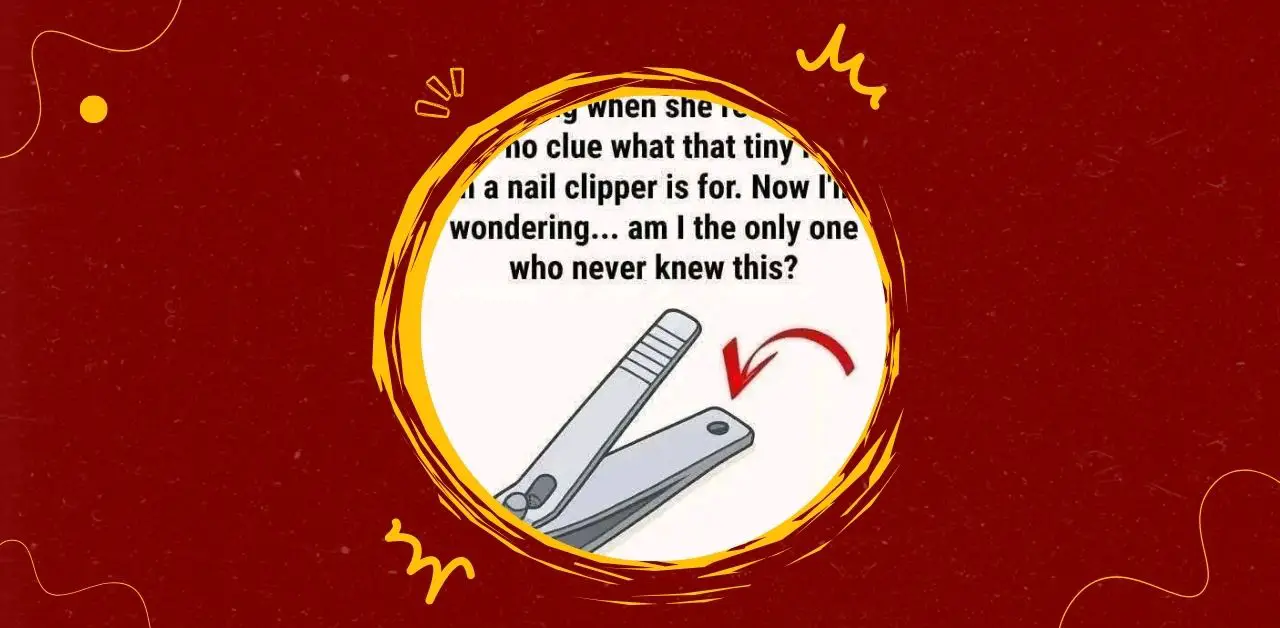
Nail clippers are one of those everyday tools we use without giving much thought to their design. Yet, if you look closely, you’ll notice a small hole on the lever arm of most clippers. Many people overlook it, and some even wonder if it’s just a decorative feature. In reality, this tiny hole has a practical purpose that reveals the cleverness of simple design. Understanding why it exists not only satisfies curiosity but also highlights how even the smallest details in everyday objects are intentional.
Functionality of the Hole
The small hole in the lever arm of a nail clipper is designed to hold the pin or rod that connects the lever to the clipper body. When the clipper is manufactured, the lever is detached, and the hole allows the pin to slide through and secure the lever in place. This mechanism enables the lever to rotate and flip, giving the clipper its signature “press-down” action. Without this hole, the lever would not be able to attach properly, and the clipper would lose its functionality.
Secondary Uses
Beyond its primary mechanical purpose, the hole can also serve as a convenient feature for portability. Some people thread a small chain, string, or keyring through the hole, making it easy to carry nail clippers while traveling. This transforms the clipper into a pocket-friendly tool that can be attached to a keychain or toiletry bag.
Why People Often Miss It
The hole is small and unobtrusive, so most users never stop to question its role. Because nail clippers are so familiar, people tend to focus on the cutting action rather than the design details. It’s only when someone points it out—or when curiosity strikes—that the hole becomes a topic of discussion. This is why many people are surprised to learn that the hole is not random but essential.
A Lesson in Everyday Design
The tiny hole in nail clippers is a reminder of how thoughtful design can be hidden in plain sight. Engineers and manufacturers often incorporate small features that make tools more functional, durable, and user-friendly. These details may seem insignificant, but they are what allow simple tools to work reliably for years.
Social and Psychological Angle
Interestingly, discovering the purpose of the hole often sparks humor or amazement, as seen in anecdotes where people laugh at not knowing something so basic. Psychologically, this reaction stems from the joy of learning something new about a familiar object. It’s a small but satisfying moment of insight, reinforcing the idea that curiosity can turn everyday experiences into opportunities for discovery.
Conclusion
The tiny hole in nail clippers is not a meaningless feature—it plays a crucial role in attaching and securing the lever, ensuring the clipper works smoothly. It also doubles as a handy spot for attaching a chain or keyring, adding portability. This small design detail demonstrates how even the simplest tools are carefully engineered. Next time you pick up a nail clipper, you’ll know that the little hole is a quiet but essential part of its design, turning an ordinary object into a clever piece of everyday engineering.