
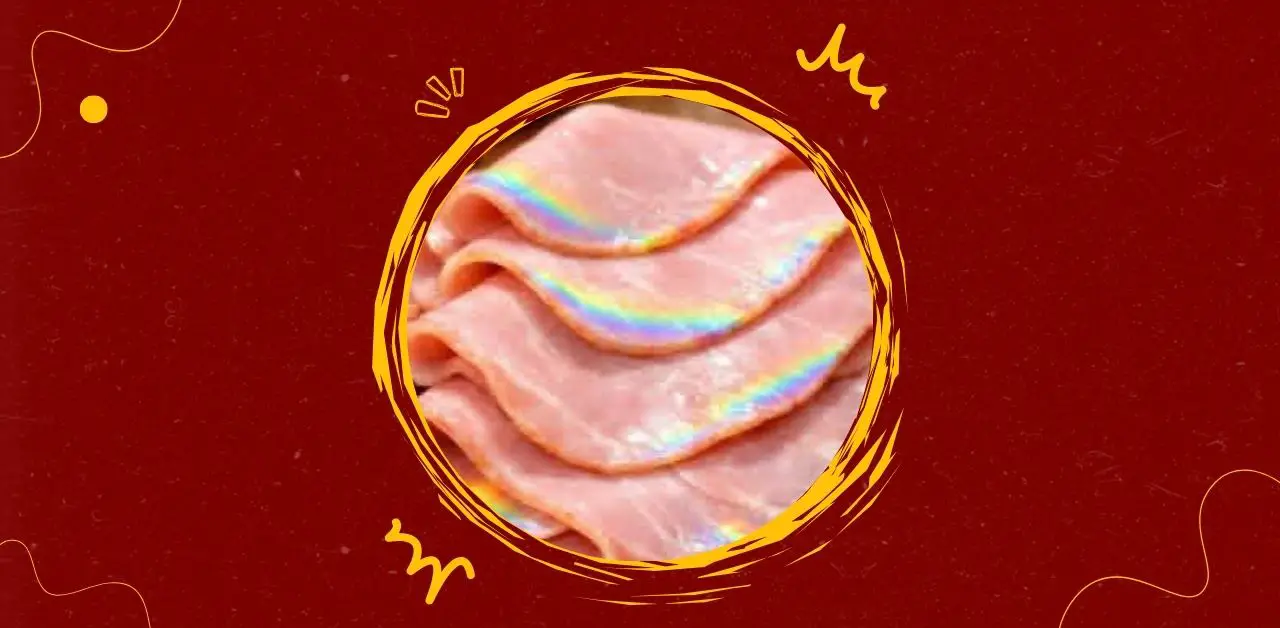
Food often surprises us with unexpected appearances, and one of the most striking examples is deli ham that develops a rainbow-like sheen on its surface. At first glance, this iridescent effect can look unusual, even suspicious, but it’s actually a natural phenomenon tied to the structure of the meat and the way light interacts with it. Let’s explore why this happens, what it means for food safety, and how to approach it in everyday cooking.
🌈 Why Does Ham Look Iridescent?
The rainbow sheen on ham is caused by light diffraction. When ham is sliced, the muscle fibers are cut in such a way that they create microscopic ridges. These ridges act like tiny prisms, scattering light into different wavelengths. As a result, the surface reflects colors similar to those seen in soap bubbles or oil on water.
This effect is more noticeable in processed meats like ham, roast beef, or turkey because they are often cured and sliced very thinly. The curing process can also enhance the reflective properties of the meat fibers, making the rainbow effect more pronounced.
🧪 Is It Safe to Eat?
Yes—iridescence in ham is not a sign of spoilage. It’s purely a visual effect caused by the physical structure of the meat. As long as the ham has been stored properly and shows no signs of spoilage (such as a sour smell, slimy texture, or discoloration beyond the sheen), it is safe to eat.
Spoiled ham will typically smell unpleasant, feel sticky or slimy, and may turn gray or green. The rainbow sheen, by contrast, is harmless and does not affect taste or safety.
🍴 The Science Behind It
- Muscle fibers: Ham is made of bundles of protein fibers. When sliced, these fibers refract light.
- Curing salts: Sodium nitrite used in curing can stabilize the meat’s color and enhance light reflection.
- Thin slicing: The thinner the slice, the more likely light will scatter across the surface, producing iridescence.
This phenomenon is similar to how CDs or soap bubbles display rainbow colors—it’s all about how light bends and reflects.
🥪 Practical Considerations
- Presentation: While safe, some people find the rainbow sheen unappealing. If serving ham for guests, thicker slices or lightly searing the meat can reduce the effect.
- Storage: Keep ham refrigerated at or below 40°F (4°C) and consume within recommended timeframes. Proper storage prevents actual spoilage.
- Cooking: Heating ham can diminish the iridescence since cooking alters the protein structure and reduces light diffraction.
📝 Final Thoughts
The rainbow sheen on ham is a fascinating example of science at work in everyday food. It’s not a warning sign but rather a natural optical effect. Understanding this helps us distinguish between harmless quirks and genuine spoilage. Instead of worrying, you can appreciate the iridescence as a reminder of the complexity hidden in simple foods.
Ham with a rainbow sheen is safe, flavorful, and perfectly fine to enjoy in sandwiches, salads, or as part of a festive meal. The next time you see those shimmering colors, you’ll know it’s just light playing across the fibers of your food—not a reason to toss it away.