
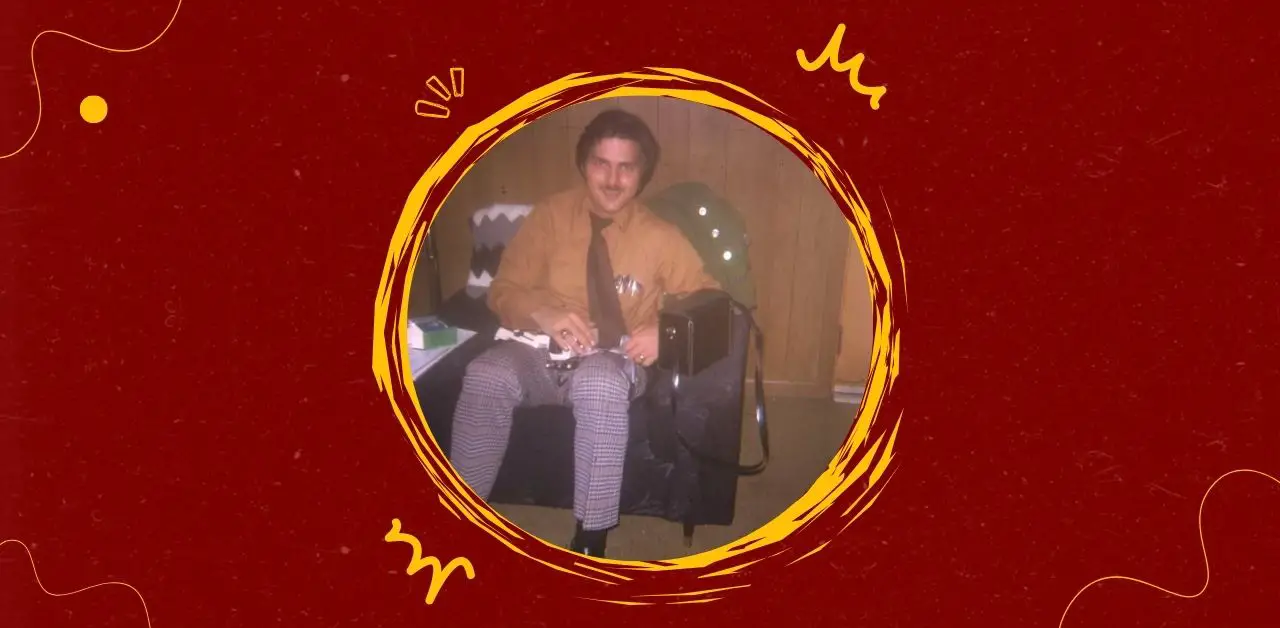
Your dad is holding a portable cassette tape recorder, a common device in the early 1970s used for recording voice, music, or meetings. These machines were compact, often came with a shoulder strap, and were widely used before digital recorders and smartphones existed.
What It Is
- Portable Cassette Recorder: A handheld or shoulder-strap device designed to record audio onto magnetic cassette tapes.
- Purpose: Used for dictation, interviews, lectures, or personal notes. Many families also used them to record music off the radio or make mixtapes.
- Design Features:
- Built-in microphone and speaker.
- Cassette slot for standard audio tapes.
- Strap for carrying convenience.
- Buttons for play, record, rewind, fast-forward, and stop.
Why It Was Popular in the 1970s
- Affordable Technology: Cassette recorders became cheaper and more accessible compared to reel-to-reel machines.
- Portability: Unlike bulky home systems, these could be carried to classrooms, offices, or family gatherings.
- Everyday Use: Students recorded lectures, journalists captured interviews, and families preserved conversations or music.
Common Brands of the Era
- Marantz Superscope – Known for professional-quality portable recorders.
- Sears Solid State – Affordable models for home use.
- Craig and Lloyd’s – Popular Japanese imports with reliable performance.
- Realistic (RadioShack) – Widely available in North America.
How It Worked
- Insert a cassette tape into the slot.
- Press the record button while speaking into the built-in microphone.
- Playback was possible through the speaker or headphones.
- Tapes could be rewound and reused, though frequent recording wore them out.
Nostalgia Factor
- These devices were often seen in living rooms, classrooms, and offices.
- Families recorded children’s voices, music from the radio, or even personal diaries.
- The sound quality was modest, but the ability to capture audio easily was revolutionary at the time.
Final Note
The contraption in your dad’s hands is almost certainly a portable cassette tape recorder, a hallmark of 1970s technology. It symbolized the shift toward accessible, personal audio recording—long before smartphones and digital recorders made the process effortless.