
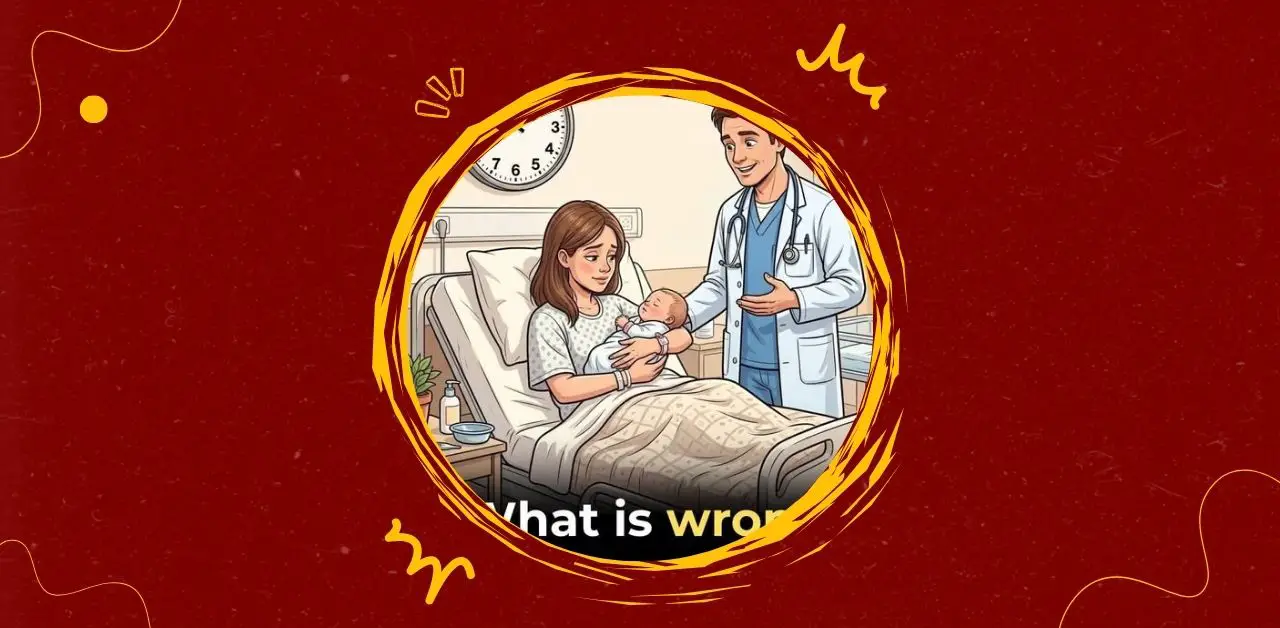
At first glance, the hospital illustration looks perfectly ordinary: a woman sits up in bed holding her newborn, a smiling doctor stands nearby, and the room is furnished with familiar details like a clock, table, and plant. Yet the caption challenges us—“What is wrong with this picture?” This kind of puzzle invites viewers to look closer, to notice inconsistencies that may not be obvious at first. Spot-the-mistake images are not only entertaining but also sharpen observational skills, encouraging us to pay attention to details we might otherwise overlook.
THE SCENE:
The hospital room is drawn in a cheerful, cartoon-like style. The mother and baby are central, radiating warmth and joy. The doctor’s presence adds reassurance, while the furnishings create a sense of everyday normalcy. However, hidden within this seemingly ordinary scene is a subtle error that disrupts the logic of the illustration.
THE MISTAKE:
The clock on the wall shows 8:00. Yet the shadows and lighting in the room suggest a source of light that doesn’t align with the time displayed. If it were 8:00 in the morning, the sun would cast light differently than what is shown. If it were 8:00 in the evening, the room would likely be darker, requiring artificial lighting. This discrepancy between the clock and the lighting is the hidden mistake.
Such inconsistencies are common in puzzle illustrations. Artists deliberately insert small errors—whether in time, perspective, or object placement—to challenge viewers. The fun lies in spotting what doesn’t belong or what doesn’t make sense.
WHY IT MATTERS:
Spot-the-mistake puzzles are more than just games. They:
- Enhance attention to detail: By forcing us to look closely, they train the brain to notice subtle differences.
- Encourage critical thinking: We question what we see, comparing it to what we know about reality.
- Provide entertainment: They are lighthearted challenges that spark curiosity and conversation.
- Teach observation skills: Especially useful for children, these puzzles improve focus and visual memory.
OTHER POSSIBLE ERRORS:
While the clock and lighting are the most obvious inconsistency, viewers may notice other small details that feel “off.” For example, the doctor’s attire may not match typical hospital uniforms, or the arrangement of objects on the side table may seem unusual. These secondary details add layers to the puzzle, making it more engaging.
CONCLUSION:
The hospital illustration is a clever example of how small details can change the logic of a scene. By asking “What is wrong with this picture?” the artist invites us to slow down, observe carefully, and think critically. The hidden mistake—the mismatch between the clock and the lighting—reminds us that even ordinary settings can contain surprises.
Ultimately, puzzles like this are not just about finding errors; they are about enjoying the process of discovery. They encourage us to look beyond the obvious, to question what we see, and to appreciate the playful ways in which art can challenge perception.