
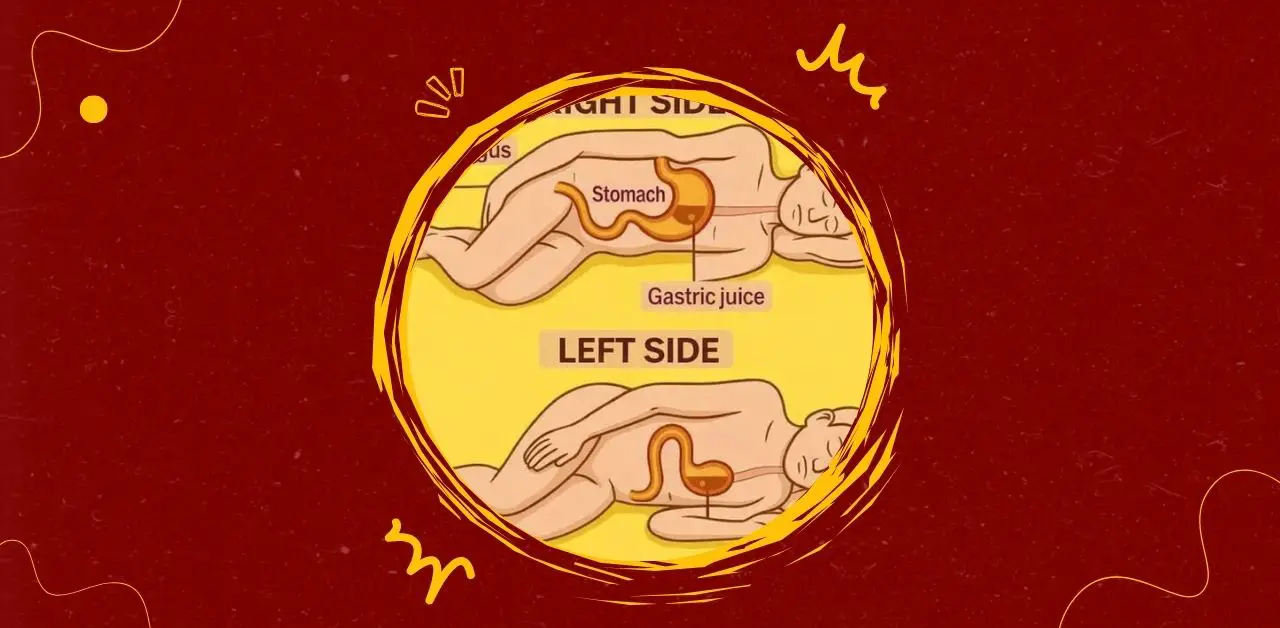
Sleep is more than rest—it’s a nightly reset for the body. Beyond mental restoration, the way we position ourselves during sleep can influence digestion, heart health, and even long-term wellness. One of the most debated topics in sleep science is whether lying on the left side or the right side makes a difference. The diagrams you shared highlight a key aspect: how stomach positioning affects gastric juice flow and acid reflux. Let’s explore this in depth.
🩺 Anatomy and Gravity: The Science Behind It
The stomach is shaped like a pouch, tilted slightly to the left. Its connection to the esophagus is controlled by the lower esophageal sphincter (LES), a muscular valve that prevents stomach acid from flowing upward.
- Right-side sleeping: When lying on the right, the stomach sits higher than the esophagus. Gravity can allow gastric juices to creep upward, increasing the risk of acid reflux or heartburn.
- Left-side sleeping: On the left, the stomach hangs lower, and gastric juices remain contained. Gravity works in favor of digestion, reducing reflux episodes.
This simple shift in posture can make a profound difference for people with GERD (gastroesophageal reflux disease) or nighttime indigestion.
🌿 Traditional Wisdom Meets Modern Science
Interestingly, ancient practices often aligned with what modern medicine now confirms:
- Ayurveda recommends left-side sleeping for better digestion and circulation.
- Yoga traditions suggest resting on the left after meals to aid nutrient absorption.
- Contemporary studies show measurable reductions in acid reflux episodes when patients sleep on their left side compared to their right.
💡 Benefits of Left-Side Sleeping
- Digestive Ease Keeps gastric juices contained, reducing reflux and heartburn.
- Heart Health Improves circulation by reducing pressure on the vena cava (the large vein returning blood to the heart).
- Lymphatic Drainage The body’s lymphatic system favors the left side, aiding detoxification.
- Pregnancy Support Doctors often recommend left-side sleeping for expectant mothers to improve blood flow to the fetus.
⚠️ When Right-Side Sleeping Might Be Better
While the left side has many advantages, the right side isn’t always “bad.” For some individuals:
- Heart conditions: Certain patients may find right-side sleeping more comfortable.
- Sleep apnea or snoring: Positioning may vary depending on airway needs.
- Personal comfort: Sleep quality matters most—forcing a position that feels unnatural can reduce restfulness.
🛌 Practical Tips for Better Sleep Posture
- Use a firm pillow to keep the head slightly elevated, reducing reflux risk.
- Place a pillow between the knees to align the spine when side-sleeping.
- Avoid lying down immediately after heavy meals; wait at least 2–3 hours.
- Experiment with body pillows to train yourself into left-side sleeping if it doesn’t come naturally.
Conclusion
The way we sleep is more than habit—it’s a nightly choice that can influence digestion, circulation, and overall health. While both sides have their place, the left side offers clear advantages for those struggling with reflux or seeking better digestive comfort. By combining scientific insight with traditional wisdom, we can make small adjustments that lead to more restful nights and healthier mornings.