
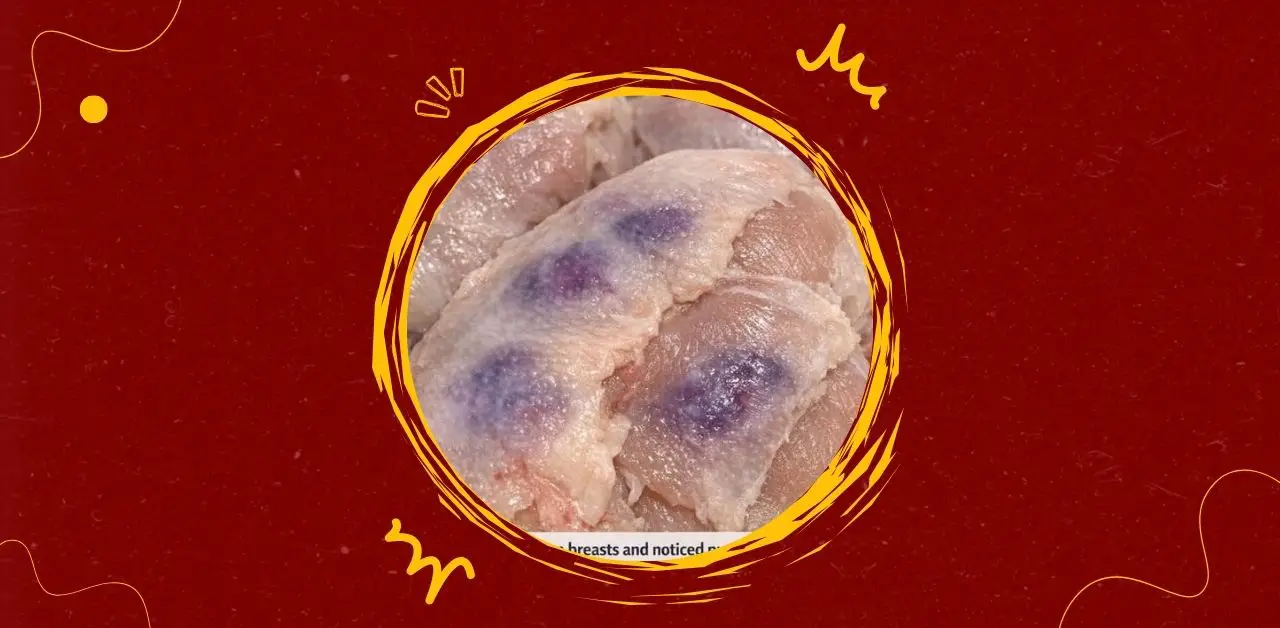
Chicken is one of the most widely consumed proteins worldwide, prized for its versatility and affordability. Yet, when preparing raw poultry, unexpected discolorations can raise questions about safety. Purple blotches or dark spots under the skin of thawed chicken breasts are one such occurrence. While they may look alarming, understanding their causes and implications helps determine whether the meat is safe to cook or should be discarded.
Causes of Purple Discoloration
- Bruising During Processing Chickens, like all animals, can sustain bruises. These appear as purple or dark blotches caused by broken blood vessels under the skin. Bruising can occur during handling, transport, or slaughter. While unattractive, bruising itself does not necessarily make the meat unsafe.
- Blood Pooling In some cases, incomplete bleeding during processing leaves residual blood in the tissues. This can create dark patches that remain visible even after thawing.
- Freezer Effects Freezing and thawing can sometimes exaggerate discoloration, making bruises or blood spots appear darker than they were initially.
- Spoilage Indicators While bruising is common, purple blotches combined with foul odor, slimy texture, or unusual stickiness may indicate spoilage. In such cases, the discoloration is not the only concern—the overall quality of the meat is compromised.
Safety Considerations
- Appearance Alone Is Not Enough Discoloration does not automatically mean the chicken is unsafe. Many bruised cuts are sold and consumed without issue.
- Check for Odor Fresh chicken should have little to no smell. A sour, rancid, or ammonia-like odor is a clear sign of spoilage.
- Examine Texture Slimy or sticky surfaces suggest bacterial growth. Safe chicken should feel firm and moist, not slippery.
- Assess Storage History If the chicken has been thawed for too long at room temperature or stored improperly, it is best to discard it regardless of appearance.
Practical Guidance
- If the chicken shows purple blotches but smells fresh and has a normal texture, it is generally safe to cook thoroughly.
- If discoloration is accompanied by odor or sliminess, discard the meat immediately.
- Always thaw chicken in the refrigerator or under cold running water, never at room temperature, to minimize bacterial growth.
- Cook chicken to an internal temperature of 165°F (74°C) to ensure safety.
Symbolism of Food Safety Awareness
The presence of purple blotches serves as a reminder of the importance of vigilance in food preparation. It highlights the need to rely on multiple sensory checks—sight, smell, and touch—rather than appearance alone. This awareness fosters safer cooking practices and reduces the risk of foodborne illness.
Conclusion
Purple blotches on thawed chicken breasts are often the result of bruising or residual blood, not necessarily spoilage. However, safety depends on the overall condition of the meat. By checking odor, texture, and storage history, one can make an informed decision about whether to cook or discard the chicken. Ultimately, when in doubt, it is better to err on the side of caution, prioritizing health and safety over saving a meal.