
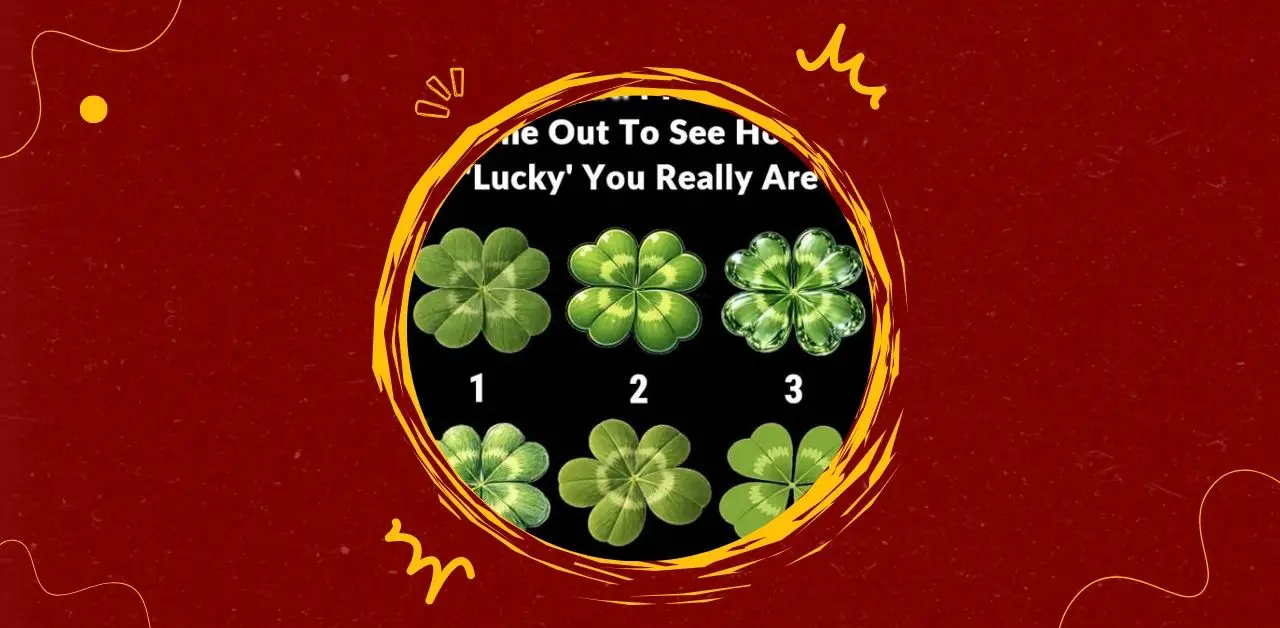
Visual puzzles like the “odd one out” clover challenge are more than just fun—they tap into perception, attention to detail, and even personality traits. When asked to choose which clover looks different, your choice can reflect how your mind processes patterns and how you approach challenges.
Why These Puzzles Work
- Pattern Recognition: The brain is wired to detect differences in shapes, colors, and symmetry.
- Focus and Attention: Spotting the odd one requires concentration and careful observation.
- Personality Insight: Some interpretations suggest that the clover you pick can reveal aspects of your mindset—whether you’re detail-oriented, intuitive, or spontaneous.
The Six Clover Options
Each clover in the puzzle has subtle differences in design. Some may have extra leaves, uneven shapes, or slight variations in symmetry. The challenge is to notice which one stands apart from the rest.
- Clover 1: May appear balanced but has a hidden irregularity.
- Clover 2: Slightly different leaf shape compared to others.
- Clover 3: Often the most symmetrical, making it a “trick” option.
- Clover 4: Shows a distinct variation in size or spacing.
- Clover 5: May have an extra curve or altered angle.
- Clover 6: Sometimes the most obvious odd one, depending on design.
What Your Choice Might Suggest
While this is playful rather than scientific, many people enjoy linking their choice to personality traits:
- Choosing a subtle odd clover (like 2 or 5): Suggests you’re detail-oriented and notice small differences others overlook.
- Choosing a more obvious odd clover (like 6): Suggests you’re decisive, quick to act, and trust your instincts.
- Choosing a symmetrical clover (like 3): Suggests you value balance, harmony, and consistency in life.
The Fun of “Luck”
The puzzle ties into the symbolism of clovers, often associated with luck. Picking the odd one out is framed as a test of how “lucky” you are, but in reality, it’s about perception and playful interpretation. The fun lies in comparing choices with friends and seeing how differently people view the same set of shapes.
Final Note
This clover puzzle is a lighthearted way to engage your brain and spark conversation. Whether you pick based on instinct or careful analysis, the exercise highlights how unique each person’s perspective is. Luck, in this case, is less about chance and more about how you see the world.