
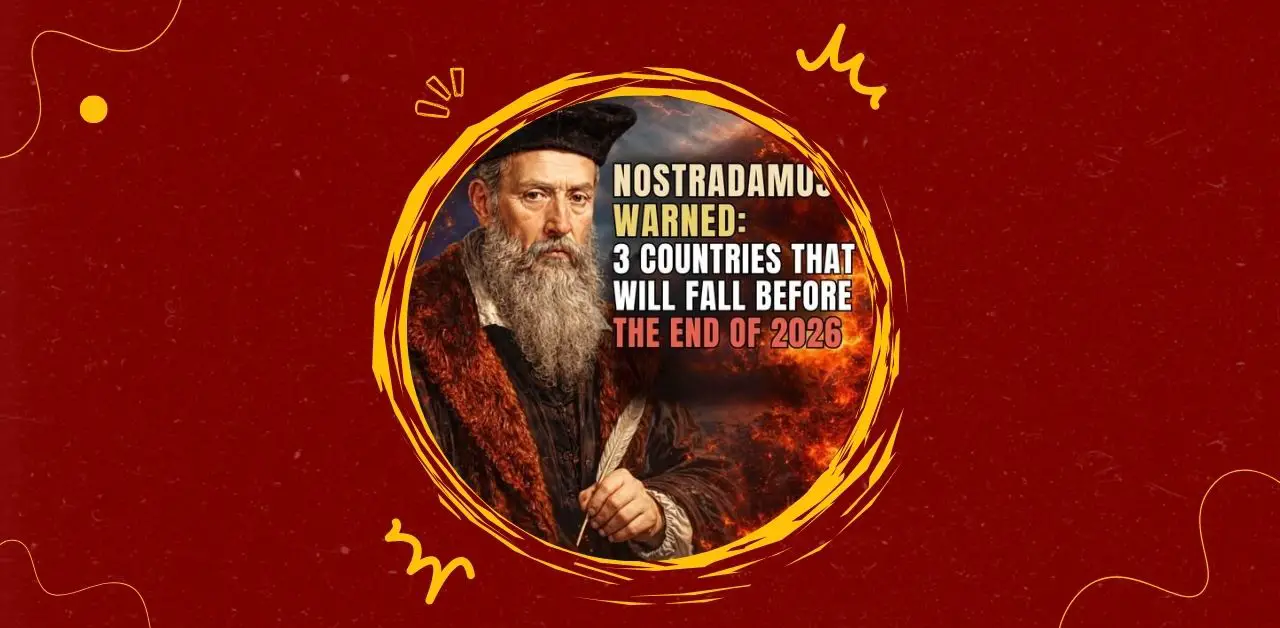
Nostradamus, the 16th-century French astrologer and physician, remains one of history’s most mysterious figures. His cryptic quatrains have been interpreted for centuries as predictions of wars, revolutions, and global upheavals. Modern sensational claims often link his writings to contemporary events, including the supposed downfall of nations. One such idea suggests that Nostradamus warned of three countries collapsing before the end of 2026. While intriguing, this interpretation blends myth, speculation, and cultural fascination more than historical fact.
Nostradamus’s Prophecies: A Brief Overview
- Written in Quatrains: His book Les Prophéties (1555) contained hundreds of four-line verses.
- Deliberately Obscure: He used symbolism, astrology, and vague language to avoid persecution and to allow multiple interpretations.
- Enduring Appeal: Because of their ambiguity, his verses have been retrofitted to match events ranging from Napoleon’s rise to World War II.
The Claim of “Three Countries Falling”
The idea that Nostradamus predicted the collapse of nations by 2026 is not found directly in his writings. Instead, it is a modern reinterpretation shaped by:
- Apocalyptic Themes: His verses often mention turmoil, famine, and war, which can be applied broadly.
- Contemporary Anxiety: Political instability, economic crises, and climate change fuel speculation about which nations might “fall.”
- Media Sensationalism: Dramatic headlines and viral posts amplify these interpretations, often without historical grounding.
Historical Context of Collapse
Throughout history, nations have risen and fallen due to:
- Economic Decline: Hyperinflation, debt, or resource depletion.
- Political Instability: Revolutions, coups, or authoritarian collapse.
- External Conflict: Wars and invasions.
- Environmental Stress: Droughts, famines, or natural disasters.
Nostradamus’s verses often reference these themes, which makes them adaptable to any era.
Why People Believe
- Ambiguity Creates Flexibility: His writings are vague enough to fit almost any event.
- Fear of the Future: Prophecies provide a framework for understanding uncertainty.
- Cultural Fascination: Linking Nostradamus to modern events keeps his legend alive.
Critical Perspective
Scholars emphasize that Nostradamus did not specifically name modern countries or give precise timelines. The claim of three nations falling by 2026 is a modern invention, not a historical prophecy. His writings were more concerned with cycles of human struggle than pinpointing exact geopolitical events.
Conclusion
The idea that Nostradamus warned of three countries collapsing before 2026 is a product of modern reinterpretation rather than historical fact. His quatrains remain powerful because they speak to universal fears of instability and change. Whether or not nations rise or fall in the coming years, the fascination with Nostradamus reminds us of humanity’s enduring desire to find meaning in uncertainty.