
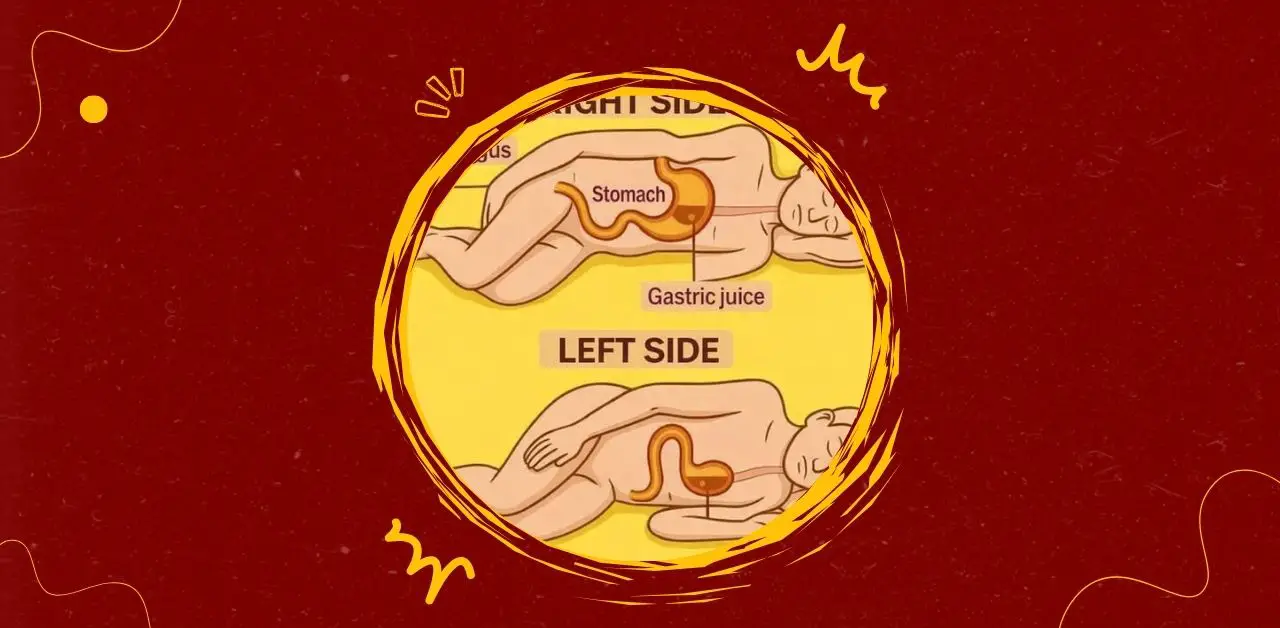
The way we sleep influences more than just rest and recovery—it can also affect digestion, acid reflux, and overall comfort. Many people experience nighttime heartburn or indigestion without realizing that their sleeping position plays a role. Research and traditional health practices suggest that sleeping on the left side may reduce acid reflux, while sleeping on the right side can sometimes worsen it. Understanding why this happens can help you make small adjustments that lead to better sleep and improved digestive health.
The Anatomy of Digestion
The stomach is located on the left side of the body, just below the ribcage. When food enters, gastric juices begin breaking it down. The esophagus connects the mouth to the stomach, and at the junction is a valve-like structure called the lower esophageal sphincter (LES). If the LES weakens or relaxes, stomach acid can flow back into the esophagus, causing heartburn or acid reflux.
Sleeping on the Right Side
When lying on the right side, the stomach is positioned so that gastric juices can more easily move upward toward the esophagus. Gravity and the angle of the stomach make it easier for acid to escape past the LES. This increases the likelihood of reflux, especially in people prone to heartburn.
- Potential effects:
- Increased acid reflux symptoms
- Greater discomfort after heavy meals
- Interrupted sleep due to burning sensations
Sleeping on the Left Side
Sleeping on the left side positions the stomach lower than the esophagus, making it harder for gastric juices to flow upward. Gravity helps keep acid contained within the stomach, reducing the risk of reflux.
- Potential benefits:
- Reduced acid reflux and heartburn
- Improved digestion overnight
- Better sleep quality for those with gastroesophageal reflux disease (GERD)
Other Sleeping Positions
- On the back: Can worsen reflux in some individuals, as acid may pool and move toward the esophagus.
- On the stomach: May reduce reflux but can strain the neck and spine, making it less comfortable long-term.
Practical Tips for Better Sleep and Digestion
- Choose the left side: Especially if you experience frequent reflux.
- Elevate the head: Using a wedge pillow or raising the head of the bed can reduce acid movement.
- Avoid heavy meals before bed: Give your stomach time to digest.
- Limit trigger foods: Spicy, fatty, or acidic foods can worsen reflux.
- Maintain healthy weight: Excess abdominal pressure can contribute to reflux.
Psychological Dimension
Sleeping positions are often habitual, but making conscious changes can improve health. For those struggling with reflux, shifting to the left side can provide relief and reassurance. It’s a small lifestyle adjustment that empowers individuals to take control of their comfort without relying solely on medication.
Conclusion
Sleeping on the left side can help reduce acid reflux by keeping gastric juices contained in the stomach, while sleeping on the right side may worsen symptoms. By understanding the anatomy of digestion and the role of gravity, you can make informed choices about your sleeping position. Combined with healthy eating habits and mindful bedtime routines, this simple adjustment can lead to better sleep and improved digestive health.