
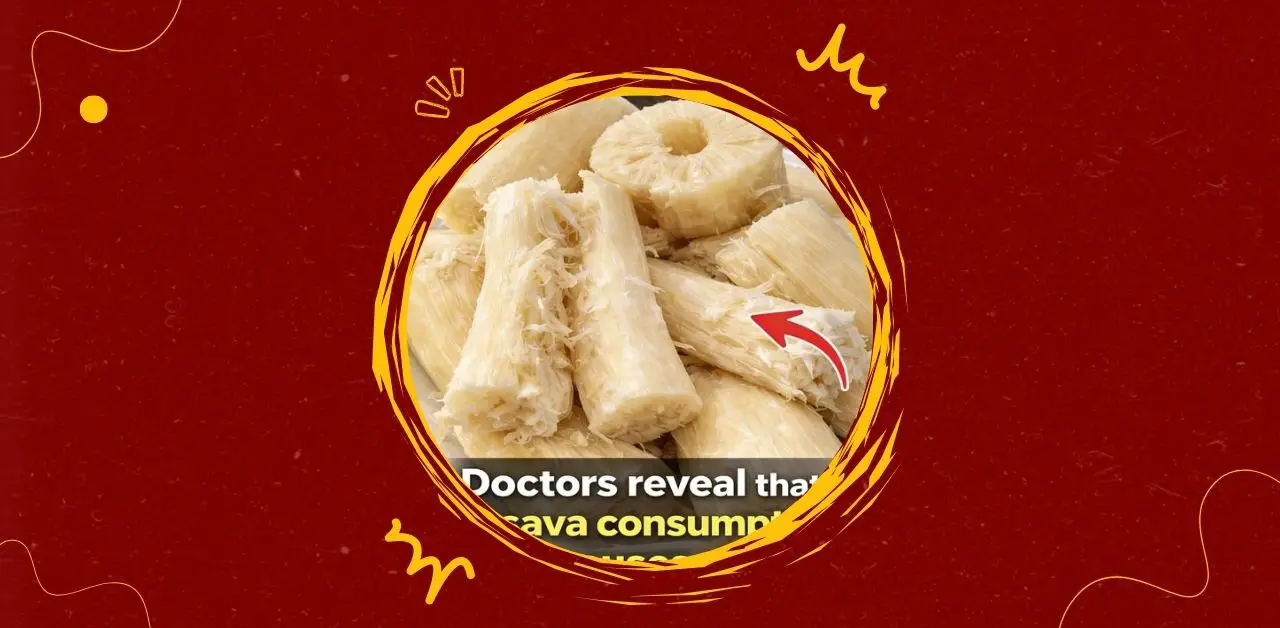
Cassava is a staple food for millions worldwide, but doctors warn that improper consumption—especially eating it raw—can cause cyanide poisoning. When prepared correctly, cassava is safe and offers nutritional benefits, but careless handling may lead to serious health risks.
🌱 What Cassava Is
- Cassava (yuca/manioc) is a starchy root vegetable grown in tropical regions.
- It is a major source of calories for over 800 million people globally.
- Commonly used to make tapioca pearls, gari, fufu, cassava fries, and puddings.
🍽 Nutritional Benefits
- High in carbohydrates → provides energy.
- Contains fiber, calcium, vitamin C, and small amounts of protein.
- Gluten-free, making it suitable for people with celiac disease.
- Supports digestive health when cooked properly.
⚠️ Health Risks & Side Effects
Doctors emphasize that cassava can be dangerous if not prepared correctly:
- Cyanide toxicity: Raw cassava contains naturally occurring cyanogenic glycosides.
- Sweet cassava → lower cyanide levels.
- Bitter cassava → much higher cyanide content.
- Symptoms of poisoning: Headaches, dizziness, vomiting, difficulty breathing, and in severe cases, death.
- Long-term risks: Chronic exposure to low levels of cyanide may cause neurological problems, goiter, or paralysis.
✅ Safe Preparation Methods
To avoid health risks, cassava must be processed carefully:
- Peel thoroughly (cyanide is concentrated in the skin).
- Soak in water for several hours to leach toxins.
- Boil, bake, or fry—never eat raw cassava.
- Fermentation (used in traditional African and Caribbean dishes) reduces cyanide further.
🩺 Doctor’s Advice
- Never eat cassava raw.
- Limit intake of bitter cassava unless properly processed.
- Children and pregnant women should be especially cautious.
- Treat cassava as a safe staple only when traditional preparation methods are followed.
👉 In short: Cassava is both a lifesaver and a potential hazard. It nourishes millions, but careless preparation can turn it toxic. If you enjoy cassava-based foods like tapioca or fries, rest assured—they’re safe because they’ve been properly processed.