
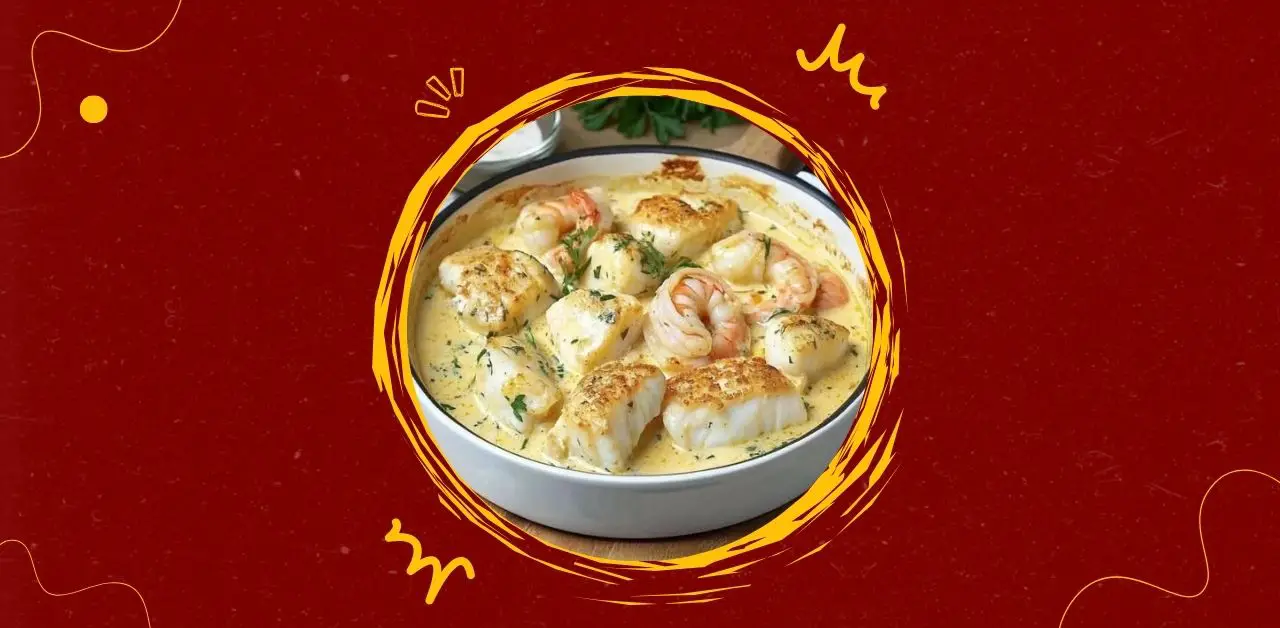
Indulgence meets the sea in this Creamy Garlic Butter Seafood Medley. This dish is a celebration of delicate textures and bold, aromatic flavors, featuring succulent jumbo shrimp and flaky white fish fillets bathed in a luxurious, velvety cream sauce. As seen in the provided imagery, the seafood is seared to a perfect golden-brown hue, providing a slight structural contrast to the rich, herb-flecked sauce that surrounds it.
This recipe is designed for those who appreciate the finer nuances of coastal cuisine but desire the comfort of a home-cooked meal. The base of the sauce is built on a foundation of high-quality butter and aromatic garlic, which is then deglazed with a touch of acidity and mellowed with heavy cream. The result is a sauce that is silk-like in consistency, clinging to the ridges of the fish and the curves of the shrimp.
The choice of seafood here is intentional. By using a firm white fish—such as cod, halibut, or sea bass—the fillets hold their shape during the searing process, ensuring they don’t break apart in the sauce. The jumbo shrimp provide a snap and a natural sweetness that balances the savory, salty notes of the garlic butter. Whether served as a centerpiece for a romantic dinner or as a sophisticated weekend meal, this dish promises a restaurant-quality experience right in your own kitchen. It is a testament to the fact that few things in the culinary world pair as perfectly as fresh seafood and a well-executed cream sauce.
INGREDIENTS
To achieve the luscious results shown in the pan, it is essential to use fresh, high-quality seafood and real dairy.
The Seafood
- White Fish Fillets (1.5 lbs): Choose thick-cut cod, halibut, sea bass, or tilapia. Pat these extremely dry before cooking.
- Jumbo Shrimp (1 lb): Peeled and deveined, with tails on or off based on your preference.
- Seafood Seasoning: A blend of salt, black pepper, and a pinch of paprika for color.
The Searing Aromatics
- Olive Oil (2 tablespoons): For high-heat searing.
- Unsalted Butter (3 tablespoons): To create that golden “crust” on the fish.
The Creamy Garlic Sauce
- Unsalted Butter (4 tablespoons): The heart of the sauce.
- Fresh Garlic (6 cloves): Finely minced. Do not use the jarred variety for this dish.
- Dry White Wine or Seafood Stock (1/2 cup): Pinot Grigio or Sauvignon Blanc works best to deglaze the pan.
- Heavy Cream (1.5 cups): Full fat is necessary for the proper thickness and mouthfeel.
- Fresh Lemon Juice (2 tablespoons): To cut through the richness.
- Fresh Flat-Leaf Parsley (1/4 cup): Finely chopped for the vibrant green flecks seen in the photo.
- Red Pepper Flakes (1/2 teaspoon): Optional, for a very subtle background heat.
- Parmesan Cheese (1/4 cup): Finely grated, to act as a natural thickener and flavor enhancer.
INSTRUCTIONS
1. Preparation of the Seafood
The key to the golden-brown exterior seen in the image is moisture control. Remove the fish fillets and shrimp from the refrigerator 15 minutes before cooking. Use paper towels to pat the fish and shrimp until they are bone-dry. Season both sides generously with salt, pepper, and paprika. If the fish fillets are very large, cut them into uniform 3-inch portions.
2. The Perfect Sear
In a large, heavy-bottomed skillet (stainless steel or cast iron is ideal for browning), heat the olive oil and 3 tablespoons of butter over medium-high heat. Once the butter is foaming and just starting to turn nut-brown, place the fish fillets in the pan. Do not crowd the pan. Sear for 3–4 minutes without moving them to develop a crust. Carefully flip and cook for another 2 minutes. Remove the fish and set aside on a warm plate. In the same pan, sear the shrimp for 1-2 minutes per side until pink and opaque. Remove and set aside with the fish.
3. Developing the Garlic Base
Lower the heat to medium. Add the remaining 4 tablespoons of butter to the skillet. Once melted, add the minced garlic. Sauté for about 60 seconds until the garlic is fragrant and golden, but be careful not to let it turn dark brown or bitter. If using red pepper flakes, add them now to toast in the butter.
4. Deglazing the Pan
Pour in the white wine (or seafood stock). Use a wooden spoon to scrape up all the “fond” (the brown bits) from the bottom of the pan. These bits contain concentrated seafood flavor. Let the liquid simmer and reduce by half.
5. Building the Cream Sauce
Reduce the heat to low. Slowing pour in the heavy cream, whisking constantly. Allow the sauce to come to a gentle simmer. Do not let it reach a rolling boil, as this can cause the cream to break. Stir in the Parmesan cheese and continue to whisk until the sauce thickens enough to coat the back of a spoon.
6. Finishing Touches
Stir in the fresh lemon juice and half of the chopped parsley. Taste the sauce. Adjust the seasoning with more salt or pepper if necessary. The sauce should be bright, creamy, and deeply garlicky.
7. Reintegrating the Seafood
Carefully nestle the seared fish fillets and shrimp back into the simmering sauce. Use a spoon to baste the seafood with the cream. Let everything sit in the pan for 1–2 minutes just to ensure the seafood is heated through to its core.
8. Serving
Garnish the entire pan with the remaining fresh parsley. Serve immediately while the sauce is at its peak silkiness.
SERVINGS
This recipe serves 4 to 6 people as a main course.
NOTE
The Importance of the Sear
Looking at the image, you will notice the fish has a distinct roasted appearance on top. This is achieved by the initial sear in butter. This doesn’t just look good; it creates a “Maillard reaction,” which adds a savory complexity that you cannot get by simply poaching the fish in the sauce. Always sear first, then sauce second.
Pairing Suggestions
To make the most of the extra cream sauce in the pan, consider the following sides:
- Starch: Serve over a bed of al dente linguine, angel hair pasta, or a creamy parmesan risotto.
- Bread: A warm, crusty French baguette is essential for “mopping up” the garlic butter sauce.
- Vegetables: Lightly steamed asparagus, roasted broccolini, or a crisp green salad with a vinaigrette provide a necessary textural and acidic contrast to the rich meal.
Variations
- The Shellfish Swap: Feel free to add sea scallops to the mix. Treat them like the fish—sear them separately to get a hard crust before adding them to the final sauce.
- Vegetable Additions: You can stir in a handful of baby spinach or sun-dried tomatoes during the sauce-simmering phase for added color and nutrition.
- Low-Carb Option: Serve the seafood over “zoodles” (zucchini noodles) or cauliflower mash for a keto-friendly version of this decadent dish.
Storage and Reheating
Seafood is notoriously difficult to reheat without becoming rubbery. If you have leftovers, store them in an airtight container in the fridge for up to 2 days. To reheat, do so very gently in a skillet over low heat. Add a splash of milk or water to loosen the sauce, as it will thicken significantly when cold. Avoid the microwave if possible.