
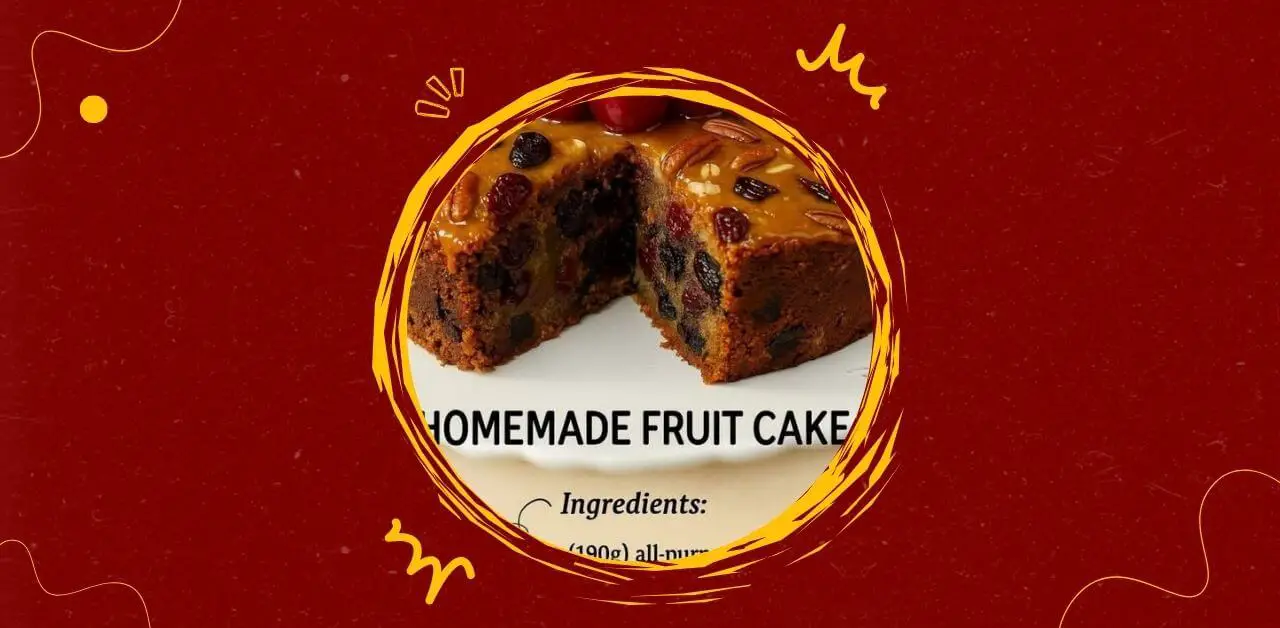
Classic Homemade Fruit Cake is a rich, dense, and celebratory dessert that has stood the test of time across cultures and generations. Known for its deep flavor, moist crumb, and vibrant medley of dried fruits and nuts, this cake is often associated with festive occasions, especially winter holidays and weddings. The beauty of this fruit cake lies in its balance—sweetness from dried fruits, warmth from spices, and richness from butter and eggs. It’s a cake that improves with age, developing deeper flavor as it rests. Whether served with tea, gifted to loved ones, or enjoyed as a centerpiece dessert, this fruit cake offers a nostalgic, indulgent experience with every bite.
INGREDIENTS:
Dry ingredients:
- 1½ cups (190g) all-purpose flour
- ½ teaspoon baking powder
- ½ teaspoon ground cinnamon
- ¼ teaspoon ground nutmeg
- ¼ teaspoon ground cloves
- ¼ teaspoon salt
Wet ingredients:
- ½ cup (100g) brown sugar
- ½ cup (115g) unsalted butter, melted
- 2 large eggs
- 1 teaspoon vanilla extract
- 2 tablespoons orange juice or rum (optional, for depth)
Fruit and nut mix:
- 1½ cups mixed dried fruits (raisins, currants, chopped dates, dried cherries)
- ½ cup chopped candied peel (orange or lemon)
- ½ cup chopped nuts (pecans, walnuts, or almonds)
- ¼ cup maraschino cherries, halved
- 2 tablespoons all-purpose flour (to coat fruits)
Optional glaze and topping:
- 2 tablespoons apricot jam or honey (for glaze)
- Whole pecans, raisins, and cherries (for decoration)
INSTRUCTION:
Step 1: Prepare the Fruit Mix
- Chop larger dried fruits into uniform pieces.
- Place all dried fruits, candied peel, and cherries in a bowl.
- Toss with 2 tablespoons of flour to prevent sinking during baking.
- If using orange juice or rum, pour over the fruit mix and let soak for 30 minutes to enhance flavor.
Step 2: Preheat and Prepare Pan
- Preheat oven to 325°F (160°C).
- Grease and line an 8-inch round or square cake pan with parchment paper.
- Ensure the paper extends slightly above the rim to protect the cake edges.
Step 3: Mix Dry Ingredients
- In a medium bowl, sift together flour, baking powder, cinnamon, nutmeg, cloves, and salt.
- Stir to combine evenly.
Step 4: Combine Wet Ingredients
- In a large mixing bowl, whisk together brown sugar and melted butter until smooth.
- Add eggs one at a time, beating well after each addition.
- Stir in vanilla extract and orange juice or rum if using.
Step 5: Incorporate Dry Ingredients
- Gradually add the dry flour mixture to the wet ingredients.
- Mix gently until just combined—do not overmix.
- The batter will be thick and slightly spiced.
Step 6: Fold in Fruits and Nuts
- Add the floured fruit mixture and chopped nuts to the batter.
- Fold gently using a spatula until evenly distributed.
- Ensure fruits are coated and not clumped together.
Step 7: Transfer to Pan and Decorate
- Spoon the batter into the prepared pan and smooth the top.
- Arrange whole pecans, raisins, and cherries on top for decoration.
- Press lightly so they adhere during baking.
Step 8: Bake
- Place the pan in the center of the oven.
- Bake for 60–75 minutes, or until a toothpick inserted into the center comes out clean.
- If the top browns too quickly, cover loosely with foil during the last 20 minutes.
Step 9: Cool and Glaze
- Remove from oven and let cool in the pan for 15 minutes.
- Transfer to a wire rack and cool completely.
- Warm apricot jam or honey and brush over the top for a glossy finish.
Step 10: Rest and Serve
- For best flavor, wrap the cooled cake in parchment and foil.
- Let rest for 24–48 hours before slicing.
- Serve in thin slices with tea, coffee, or dessert wine.
SERVINGS:
This recipe yields 8–10 generous slices. For smaller portions, slice thinner and serve with accompaniments like whipped cream or fruit compote.
NOTE:
- Fruit Selection:
- Use a mix of raisins, currants, dates, and cherries for varied texture and flavor.
- Avoid overly moist fruits that may affect the cake’s structure.
- Soaking in juice or alcohol enhances depth and prevents dryness.
- Spice Balance:
- Cinnamon, nutmeg, and cloves offer warmth and complexity.
- Adjust quantities based on preference—less for a milder cake, more for a spiced version.
- Nut Options:
- Pecans and walnuts add crunch and richness.
- Toast nuts lightly before adding for deeper flavor.
- For nut-free version, omit and increase fruit quantity slightly.
- Moisture Control:
- Melted butter and eggs provide richness.
- Brown sugar adds moisture and caramel notes.
- Avoid overbaking to prevent dryness.
- Storage:
- Wrap tightly and store in a cool, dry place for up to 1 week.
- Refrigerate for longer shelf life—up to 2 weeks.
- Freeze for up to 3 months. Thaw overnight before serving.
- Flavor Maturation:
- Fruit cake improves with age. Resting allows flavors to meld.
- For extended aging, brush with rum or brandy weekly and store wrapped.
- Presentation Tips:
- Serve on a white or wooden platter for contrast.
- Garnish with fresh cherries or citrus zest for brightness.
- Pair with cream cheese frosting or spiced whipped cream for added indulgence.
- Allergy Notes:
- Contains gluten, dairy, eggs, and nuts.
- For gluten-free, use a 1:1 gluten-free flour blend.
- For dairy-free, substitute butter with plant-based alternative.
- For egg-free, use flaxseed or yogurt-based egg replacer.
- Cultural Roots:
- Fruit cake has origins in European holiday traditions.
- Often served at weddings, Christmas, and New Year celebrations.
- Symbolizes abundance, warmth, and festive generosity.
- Mindful Enjoyment:
- Rich and dense—best enjoyed in small portions.
- Share with loved ones or gift as a homemade treat.
- Appreciate the craft and care in each layer of flavor.