
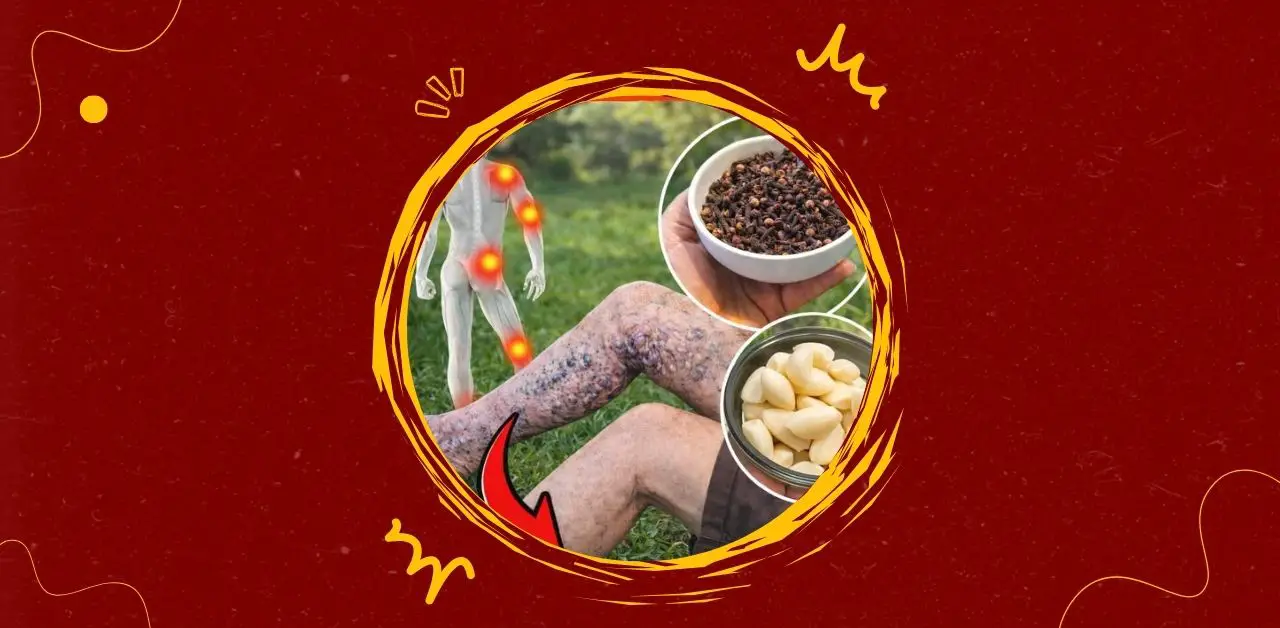
This warm herbal tea combines garlic, cloves, ginger, and lemon—ingredients often celebrated in traditional wellness practices for their ability to support circulation, reduce inflammation, and provide soothing relief. While it is not a medical treatment, this tea can be a gentle addition to daily routines, offering warmth, hydration, and natural compounds that may help ease discomfort.
INGREDIENTS:
- 2 cups water
- 2 garlic cloves, lightly crushed
- 3 whole cloves
- 1-inch piece of fresh ginger, sliced
- Juice of ½ lemon
- 1 teaspoon honey (optional, for sweetness)
INSTRUCTION:
- Prepare the base: Bring 2 cups of water to a gentle boil in a saucepan.
- Add aromatics: Drop in garlic, cloves, and sliced ginger. Reduce heat and let simmer for 10 minutes.
- Strain and finish: Remove from heat, strain into a cup, and stir in fresh lemon juice. Add honey if desired.
- Serve warm: Drink slowly, ideally in the evening or morning, to enjoy its soothing qualities.
SERVINGS:
This recipe yields 2 servings, enough for one or two cups of tea.
NOTE:
This tea is not a cure for arthritis, varicose veins, or rheumatism, but it can be a comforting ritual. Garlic and cloves contain compounds that may support circulation, ginger is known for its anti-inflammatory properties, and lemon provides vitamin C to aid overall wellness. Honey adds a touch of sweetness and can soothe the throat.
For someone experiencing chronic pain or mobility issues, this tea should be seen as a supportive beverage rather than a treatment. Professional medical guidance is essential for managing conditions like arthritis or varicose veins. Alongside medical care, gentle exercise, hydration, and a nutrient-rich diet can help maintain circulation and joint health.
This recipe also embodies the idea of mindful nourishment. Preparing and sipping a warm tea can be calming, offering comfort beyond its physical effects. It’s a reminder that small, thoughtful practices can bring relief and connection, even in the face of long-term health challenges.