
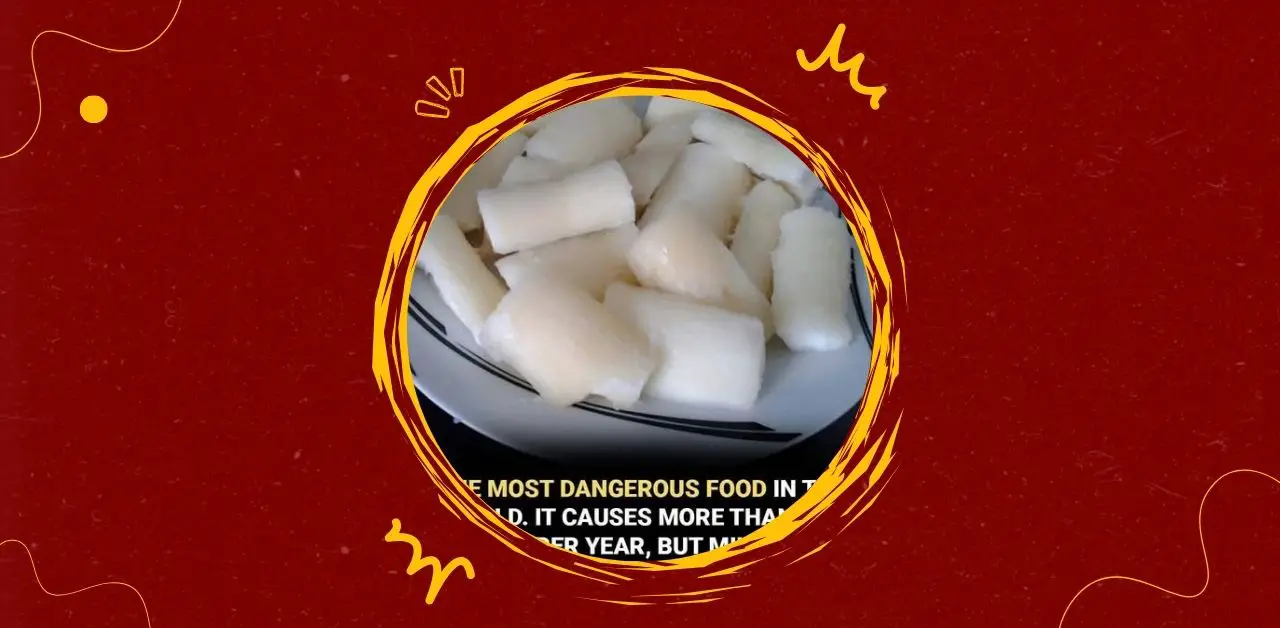
Cassava is a staple food for millions worldwide, but it contains naturally occurring cyanogenic glycosides that can release cyanide if not properly processed. While safe when prepared correctly, improper handling has led to outbreaks of poisoning and even deaths, particularly in regions where cassava is a dietary mainstay.
🌱 What Cassava Is
- Cassava (Manihot esculenta) is a root vegetable widely consumed in Africa, Asia, and Latin America.
- It is used to make garri, tapioca, fufu, flour, and starch, and also plays a role in non-food industries like biofuels and pharmaceuticals.
⚠️ The Danger: Cyanide Content
- Cassava contains cyanogenic glycosides, which release hydrogen cyanide when the root is damaged or improperly processed.
- Improper preparation (e.g., eating raw cassava or poorly fermented flour) can cause acute cyanide poisoning.
- Symptoms include headache, dizziness, vomiting, abdominal pain, and in severe cases, respiratory failure or death.
📊 Documented Cases
- Uganda (2017): An outbreak of cyanide poisoning from cassava flour affected 98 people and caused 2 deaths.
- Globally, cassava-related cyanide poisoning is estimated to cause hundreds of deaths annually, though exact figures vary due to underreporting.
✅ Safe Preparation Methods
To reduce cyanide risk, traditional and modern methods are used:
- Peeling and soaking: Removes much of the cyanide-rich outer layers.
- Fermentation: Breaks down cyanogenic compounds.
- Boiling and drying: Heat helps volatilize cyanide.
- Proper storage: Prevents microbial activity that can increase toxin release.
When processed correctly, cassava is safe and nutritious, providing carbohydrates, fiber, and minerals.
🌍 Why People Still Eat Cassava
- Food security: Cassava is drought-resistant and grows in poor soils, making it vital in regions with limited crop options.
- Economic importance: It supports millions of farmers and industries worldwide.
- Cultural staple: Deeply integrated into traditional diets across Africa, Asia, and South America.
🛑 Risks and Precautions
- High-risk groups: Communities relying heavily on cassava without diverse diets are most vulnerable.
- Chronic exposure: Long-term low-level cyanide intake can cause neurological disorders such as konzo, a paralytic disease reported in Sub-Saharan Africa.
- Precaution: Always ensure cassava is properly processed before consumption.
🌟 Conclusion
Cassava is both a lifeline crop and a potential hazard. Its resilience makes it indispensable in food systems, but its cyanide content demands careful preparation. The lesson is clear: cassava is safe and nourishing when handled correctly, but dangerous when consumed raw or improperly processed.