
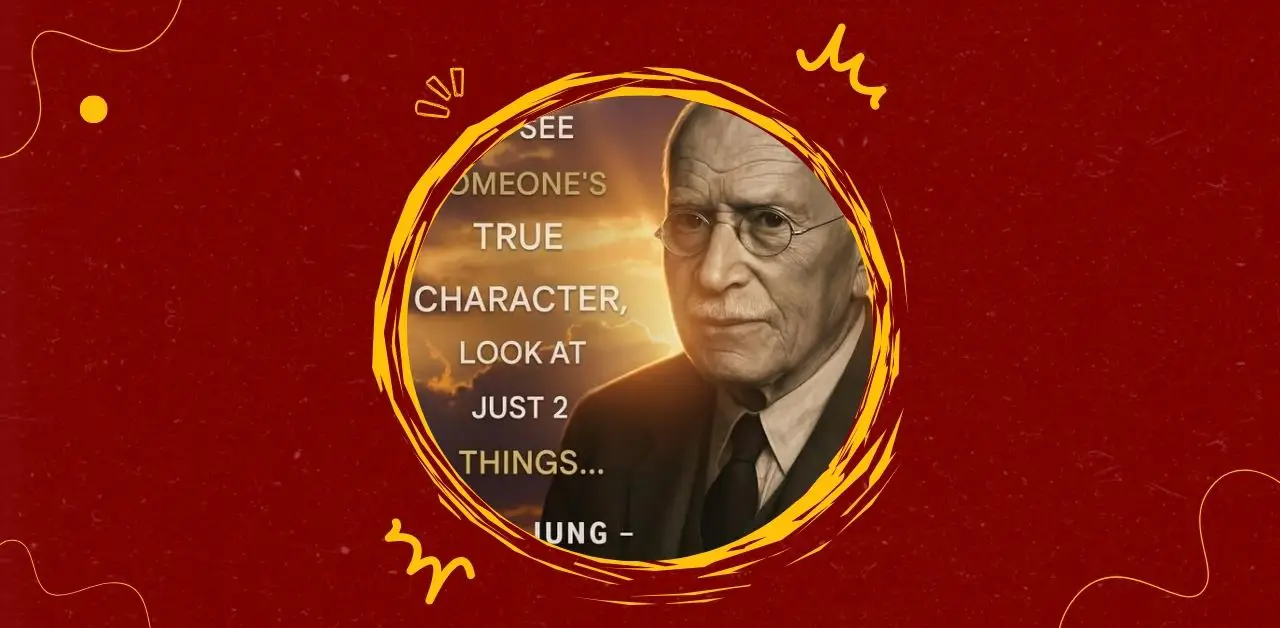
Carl Jung, the Swiss psychiatrist and psychoanalyst, is widely regarded as one of the most influential thinkers in psychology. His work on archetypes, the collective unconscious, and personality types continues to shape modern thought. Among his many insights, Jung often emphasized the importance of observing human behavior to understand true character. A famous quote attributed to him suggests that to see someone’s real nature, one must look at just two things. This idea invites us to reflect on what truly reveals who we are beneath appearances.
The Essence of Character
Character is more than reputation or outward behavior. It is the sum of values, choices, and inner motivations that guide a person’s life. Jung believed that character is revealed not through words alone but through consistent actions and responses to life’s challenges. In his view, the unconscious mind plays a powerful role in shaping behavior, and true character emerges when individuals confront their deeper instincts and values.
Two Key Indicators of Character
While Jung’s writings cover a wide range of psychological themes, the idea of “two things” that reveal character can be interpreted as:
- How a person treats those with less power Jung and other thinkers often noted that the way someone interacts with people who cannot offer them advantage—such as subordinates, strangers, or those in need—reveals genuine values. Respect, kindness, and empathy in these situations demonstrate integrity.
- How a person responds to adversity Challenges, failures, and crises strip away pretenses. Jung believed that the unconscious drives and true personality surface most clearly when individuals face hardship. Courage, resilience, and honesty in difficult times reveal the strength of character more than success ever could.
Together, these two aspects—treatment of others and response to adversity—offer a window into the authentic self.
Jung’s Broader Perspective
Jung’s theories remind us that character is not static. It evolves as individuals confront their inner conflicts and integrate different aspects of their psyche. His concept of individuation—the process of becoming whole—suggests that true character emerges when people reconcile their conscious and unconscious selves. This journey requires honesty, self-awareness, and the courage to face uncomfortable truths.
Practical Reflections
- In daily life: Observe how people act when no recognition is expected. Small acts of kindness often reveal more than grand gestures.
- In leadership: Leaders who remain humble and compassionate toward their teams demonstrate authentic character.
- In personal growth: Facing setbacks with resilience and learning from mistakes strengthens character over time.
Conclusion
Carl Jung’s insight into character challenges us to look beyond appearances. True character is revealed in how we treat others, especially those with less power, and how we respond to adversity. These two indicators cut through superficial impressions and expose the deeper values that define a person.
By reflecting on Jung’s perspective, we are reminded that character is not about perfection but about authenticity. It is about living with integrity, facing challenges with courage, and treating others with respect. In the end, these qualities form the foundation of a life that is both meaningful and true.